Will AI Replace Humans? A Health Equity Perspective
Will AI replace humans? Explore health equity risks, real data, and a human-centered framework. Request a proposal from MinisterScientist.com today.

Will AI replace humans is one of the most urgent questions facing healthcare, life sciences, and nearly every workplace today. As hospitals, biotech companies, and universities race to adopt artificial intelligence, workers and leaders alike wonder whether algorithms will eventually take over the jobs, decisions, and even relationships that once required a human touch. However, the honest answer is more nuanced than a simple yes or no, and it depends heavily on how organizations choose to implement the technology.
Direct answer: AI will likely replace specific tasks and job functions, particularly repetitive, data-heavy, and administrative work. Yet it is unlikely to fully replace humans in roles that require judgment, empathy, trust, and cultural context — the very qualities health equity and biomedical ethics work depends on.
Humans still guide the decisions that matter most, even as AI reshapes daily workflows.
Will AI Replace Humans? The Short Answer
In short, AI is replacing tasks far more often than it is replacing people. For example, an AI tool might draft a clinical note or sort incoming data, but a clinician still reviews, contextualizes, and acts on that information. Therefore, the more accurate question is not whether AI will replace humans entirely, but which tasks within a job are most likely to shift toward automation over the next decade.
According to the World Economic Forum's Future of Jobs Report, automation and AI are expected to displace roughly 85 million jobs globally by 2025 while simultaneously creating about 97 million new roles (World Economic Forum). Consequently, the net effect depends heavily on how well organizations manage the transition, not on the technology alone.
What Is Behind the Fear That AI Will Replace Humans?
Much of the anxiety around AI replacing human workers stems from real history. In particular, past waves of automation did eliminate entire categories of manufacturing and clerical jobs, often without adequate retraining support. As a result, people reasonably extend that pattern forward and ask whether AI will do the same to knowledge work, caregiving, and even ministry.
In addition, there is a deeper concern beneath the job-loss question: who controls the systems making decisions about our lives? Specifically, patients and communities often have no visibility into how an algorithm scored their risk, approved their claim, or flagged their record. Similarly, many workers feel that AI tools were imposed on them rather than built with their input, which erodes trust even when the technology itself performs well.
The Data Behind AI and Job Displacement
Numbers matter here. The McKinsey Global Institute estimates that up to 30 percent of hours worked across the U.S. economy could be automated by 2030, with administrative and routine cognitive tasks affected most (McKinsey Global Institute). Meanwhile, the U.S. Bureau of Labor Statistics tracks occupational growth projections that consistently show healthcare support and direct-care roles expanding, not shrinking, even as AI adoption increases (U.S. Bureau of Labor Statistics).
Above all, this data suggests a pattern: AI absorbs routine, high-volume tasks while human demand grows in roles requiring relational trust. For instance, a billing clerk's repetitive entry work may shrink, but the need for case managers who build relationships with patients tends to hold steady or grow. Therefore, the organizations best positioned for the future are the ones planning for this shift deliberately, not reactively.
Where AI Falls Short: The Human Factor It Can't Replace
AI, broadly defined, refers to computer systems trained to perform tasks that normally require human intelligence, such as pattern recognition or language generation (Wikipedia). However, intelligence is not the same as wisdom, accountability, or dignity. Specifically, an algorithm cannot sit with a grieving family, advocate for a marginalized patient in a policy meeting, or weigh a difficult ethical tradeoff with lived moral conviction.
This is precisely why trust, accountability, and cultural context must be treated as conditions of performance, not optional extras layered on after deployment. In contrast to purely technical metrics like accuracy or cost, these human factors determine whether a tool actually helps the people it was built to serve. Without that lens, even a highly accurate model can quietly widen health disparities instead of closing them.
AI Replacing Human Jobs: A Step-by-Step Look at How Organizations Can Prepare
Rather than reacting to AI after it has already disrupted a workforce, organizations can take a structured, proactive approach. The following five steps outline a responsible path forward.
- Conduct an AI equity and ethics assessment. Begin by evaluating which existing roles and workflows an AI tool would touch, identifying where bias, exclusion, or harm could emerge before any system goes live.
- Map tasks versus entire jobs. Separate the specific tasks a tool will automate from the full job description, since most roles retain significant human judgment even after automation begins.
- Engage the affected community and staff. Hold structured conversations with frontline staff, patients, or community members who will be affected, using their feedback to shape implementation decisions rather than announcing changes after the fact.
- Build a responsible implementation roadmap. Translate assessment findings into a phased roadmap with accountability checkpoints, training plans, and clear metrics that include trust and equity alongside accuracy and cost.
- Monitor outcomes and adjust continuously. After deployment, track outcomes for both efficiency and human impact, revisiting the plan quarterly so the organization can correct course as real-world results emerge.
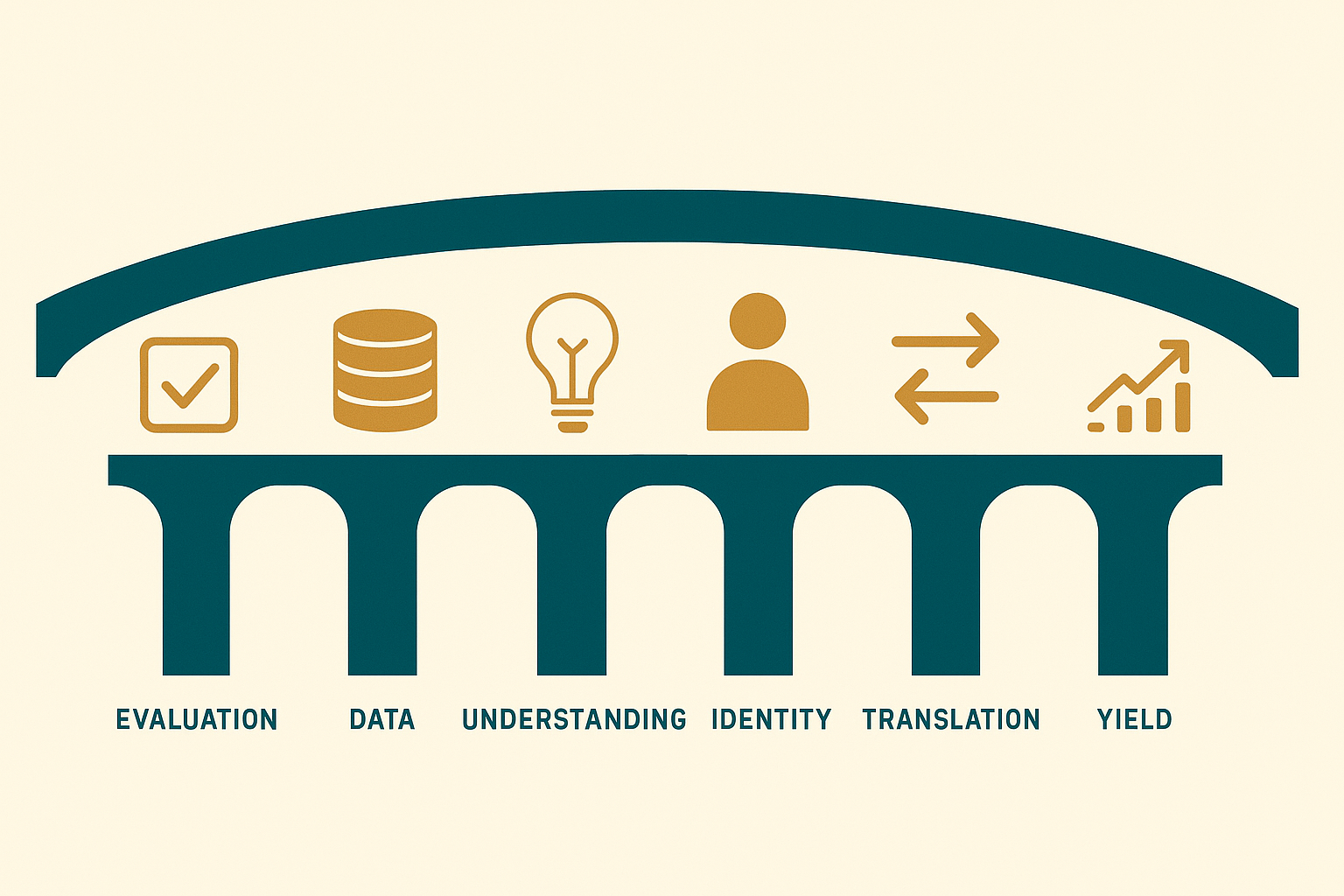
A structured, human-centered framework helps organizations decide where AI belongs — and where it does not.
Can AI and Humans Work Together Instead of Competing?
Yes, and in most well-run organizations, that is already the model. For example, a fractional Chief AI and Health Equity Advisor can sit between data science teams and frontline staff, translating technical capability into decisions that respect both performance and dignity. Similarly, an AI opportunity assessment can identify exactly where automation genuinely helps patients versus where it merely shifts cost onto someone less visible, such as an overworked caregiver or an under-resourced community clinic.
Furthermore, pairing AI with human oversight tends to outperform either alone. In particular, diagnostic tools paired with experienced clinicians catch more errors than either the algorithm or the physician working independently. As a result, the goal should never be choosing between AI and people, but rather designing systems where each does what it does best.
How the AI4EQUITY™ Framework Centers Human Dignity in AI Decisions
The AI4EQUITY™ Implementation Framework offers a six-pillar methodology — Evaluation, Quantify, Understanding, Identity, Translation, and Yield — grounded in community-based participatory research and system dynamics. Specifically, it treats trust, accountability, and cultural context as conditions of performance, placed alongside accuracy and cost rather than beneath them. This matters because a tool can be statistically accurate and still fail the people it is meant to serve if it ignores lived context.
Organizations exploring responsible AI implementation strategy and advisory services often start with an AI equity and ethics assessment, then move toward a full enterprise transformation roadmap. In addition, leaders seeking deeper grounding in these ideas can explore the AI for Human Enrichment book series, which examines AI's human and moral dimensions in detail, including a volume available now for preorder.
Preparing Your Organization: Next Steps
Above all, the organizations that navigate this transition well are the ones that start early and involve the right voices from the beginning. Whether your team needs a 90-day action plan, a fractional advisor, or a keynote that helps staff understand what is changing and why, the work begins with an honest assessment of where AI genuinely helps and where it does not belong. You can learn more about these services and request a proposal directly at MinisterScientist.com, and organizations planning a conference, grand rounds, or executive briefing can review speaking and education offerings as well.
As a reminder, any information shared through an inquiry or engagement with this practice is used for one purpose only: to serve you well. It is never sold, rented, or disclosed to third parties for marketing or resale.
Frequently Asked Questions About Will AI Replace Humans
What does "will AI replace humans" mean in healthcare and business?
The question of whether AI will replace humans usually refers to concern that algorithms will take over tasks, decisions, or jobs once performed exclusively by people. In practice, it is less about total replacement and more about which specific tasks shift from human to machine.
How is AI currently changing jobs in healthcare and life sciences?
AI is already automating administrative work such as scheduling, billing, and documentation, as well as assisting with diagnostic image review. However, roles involving patient trust, ethical judgment, and community engagement remain firmly human-led.
Why do people worry that AI will replace humans?
People worry that AI will replace humans because automation has historically displaced certain job categories, and new technology often arrives faster than policy or retraining programs can respond. This fear is compounded when workers feel excluded from decisions about how AI is deployed.
What is the difference between AI replacing tasks and AI replacing jobs?
AI replacing a task means a machine performs one piece of a job, such as transcribing notes, while a human still oversees the overall role. AI replacing a job means the entire position becomes unnecessary, which is far less common and usually limited to highly repetitive, low-judgment work.
Does preparing for AI job disruption cost organizations money?
Yes, responsible AI preparation requires investment in assessments, training, and implementation strategy, though the cost is typically far lower than the expense of a failed or inequitable rollout. Organizations that skip this step often pay more later in rework, reputational harm, or lost trust.
How soon will AI replace humans in certain industries?
Timelines vary widely by industry and task, but labor economists generally expect gradual, uneven change rather than sudden mass replacement. Healthcare and life sciences, in particular, tend to adopt AI more slowly due to regulation, safety, and ethical review requirements.
What mistakes do organizations make when implementing AI?
Common mistakes include deploying AI tools without equity assessments, ignoring community and staff input, and treating accuracy as the only measure of success. As a result, tools can perform well on paper while eroding trust or harming vulnerable populations in practice.
What are best practices for responsible AI implementation?
Best practices include conducting an AI equity and ethics assessment before deployment, involving affected communities early, and building accountability checkpoints into every phase. Frameworks grounded in community-based participatory research help ensure cultural context is treated as a performance factor, not an afterthought.
Who controls and owns the data AI systems use?
Data ownership depends on contracts between the organization collecting the data, the AI vendor, and sometimes third-party cloud providers, and it is rarely transparent to the people the data describes. This lack of clarity is one reason responsible AI advisory work prioritizes explicit data governance agreements.
What is inside the data centers powering AI?
Data centers house thousands of servers, cooling systems, and networking equipment that store and process the information AI models learn from and respond to. They also consume significant electricity and water, which raises environmental and community-impact questions that are often overlooked in AI discussions.
How can parents help children keep up with AI?
Parents can help children keep up with AI by teaching critical thinking about AI-generated content alongside traditional literacy and reasoning skills. Equally important is modeling healthy boundaries with technology so children understand AI as a tool, not a replacement for human relationships.
Why is there no real policy around AI development?
Policy has lagged because AI development moves faster than legislative and regulatory processes, and competing commercial interests often resist binding rules. In addition, policymakers frequently lack the technical expertise needed to craft enforceable, meaningful standards.
How does the AI4EQUITY framework address whether AI will replace humans?
The AI4EQUITY Implementation Framework treats trust, accountability, and cultural context as conditions of AI performance, not optional extras, which keeps human dignity at the center of every deployment decision. This approach shapes how organizations decide which tasks AI should handle and which must remain human-led.
Conclusion: Humans Remain at the Center of AI's Future
In the end, will AI replace humans is the wrong framing for most organizations to obsess over. Instead, the better question is which tasks AI should take on, which decisions must remain human, and how to build that transition with trust, accountability, and dignity intact. As the data shows, AI is reshaping work faster than policy can keep pace, which makes a deliberate, community-informed implementation strategy more important than ever. Therefore, whether you lead a health system, a biotech company, or a university research center, the path forward starts with an honest assessment, not a guess, and that work can begin with a simple conversation about where your organization stands today.