Prioritization in Healthcare AI: A Practical Guide
Prioritization in healthcare AI determines which equity risks get addressed first. Learn a practical framework and request a proposal today.

Prioritization is the process healthcare and life-science organizations use to decide which artificial intelligence (AI) initiatives deserve resources, oversight, and attention first. Rather than ranking projects by technical readiness alone, sound prioritization weighs who is affected, how badly, and how soon harm could occur if the wrong initiative moves forward too fast. For health systems, biotechnology firms, and academic medical centers exploring AI, prioritization is often the single decision that determines whether a project builds trust or erodes it.
This matters because AI adoption in healthcare rarely fails for lack of technology. It fails when organizations choose the wrong project first, skip the communities most affected, or move faster than their governance can support. The AI4EQUITY™ Implementation Framework, developed through years of community-based participatory research and system dynamics work, treats prioritization as a discipline rather than a gut call. The sections below walk through what prioritization means in this context, why it carries outsized weight in healthcare, and how a structured process keeps human dignity at the center of every decision.
What Is Prioritization in Responsible Healthcare AI?
Prioritization in responsible healthcare AI is the structured ranking of potential AI projects based on equity impact, feasibility, and risk rather than technical convenience alone. In short, it answers one question: which initiative, if addressed first, prevents the most harm or delivers the most benefit to the people most affected?
Consequently, prioritization looks different in healthcare than in most industries. A retail company might prioritize AI by revenue impact. A hospital system, in contrast, must weigh clinical safety, patient trust, workforce disruption, and regulatory exposure together. For example, a diagnostic triage tool might promise efficiency gains, but if it has not been tested across diverse patient populations, prioritizing it ahead of a better-validated tool could widen existing disparities. According to a 2023 National Academy of Medicine report, AI tools deployed without equity-focused validation have repeatedly underperformed for underrepresented patient groups, which is precisely why sequencing decisions carry real clinical weight.
Why Setting AI Priorities Protects Health Equity
Setting clear AI priorities protects health equity because it forces organizations to confront trade-offs before deployment rather than after harm appears. Specifically, it prevents the common pattern where the easiest project to build gets launched first, regardless of whom it affects.
Furthermore, health equity is not a single checkbox; it is a condition that shifts depending on which populations, languages, and care settings a tool touches. As a result, organizations that skip structured prioritization tend to discover equity gaps only after a tool has scaled, when correction is expensive and trust has already eroded. In contrast, organizations that prioritize deliberately can test smaller, higher-risk use cases first, in controlled settings, before expanding. This is one reason the business description behind this framework treats trust, accountability, and cultural context as conditions of performance, not afterthoughts layered on once a model is already live.
How the AI4EQUITY™ Framework Guides Prioritization
The AI4EQUITY™ Implementation Framework guides prioritization through six pillars: Evaluation, Quantify, Understanding, Identity, Translation, and Yield. Together, these pillars move an organization from a vague list of AI ideas to a defensible, ranked sequence of action.
Notably, this framework was built on community-based participatory research, meaning the people affected by an AI tool have a documented voice in how it gets ranked, not just a survey after launch. Similarly, system dynamics modeling is used to anticipate second-order effects, such as how prioritizing one department's AI tool might shift workload or risk onto another. Organizations working with a responsible AI advisory engagement typically begin here, using the framework to produce a ranked initiative list before committing budget to any single tool.
Thoughtful prioritization keeps equity and feasibility in view before any AI tool reaches patients.
A Six-Step Process for Prioritizing AI Initiatives
Turning prioritization into practice requires a repeatable sequence rather than a one-time workshop. The following numbered steps mirror the AI4EQUITY™ pillars and can be adapted to organizations of nearly any size.
- Evaluate current state. Review existing workflows, data systems, and known disparities before ranking any initiative, so the baseline is clear.
- Quantify impact and risk. Score each potential use case on patient impact, cost, and the likelihood of worsening inequities across groups.
- Understand affected communities. Talk directly with patients, frontline staff, and community representatives; data alone rarely reveals the full picture.
- Clarify identity and accountability. Assign clear ownership for each prioritized initiative, including who answers for unintended harm after launch.
- Translate findings into a roadmap. Convert the ranked list into phased timelines with equity checkpoints built into every stage of rollout.
- Yield measurable outcomes. Track agreed outcome measures after launch, and revisit the priority order as new data or community feedback arrives.
Organizations that need outside support running this sequence often begin with an AI opportunity assessment, which typically produces a 90-day action plan rather than a lengthy theoretical report.
Common Mistakes in AI Project Ranking
Even well-intentioned organizations make predictable errors when ranking AI projects. Recognizing them early saves time, money, and trust.
First, many teams rank initiatives by how quickly engineers can build them, ignoring downstream equity impact entirely. Second, organizations frequently skip community input until after a pilot, treating it as a formality rather than a ranking input. Third, leaders sometimes underestimate workforce disruption, prioritizing automation tools without a clear plan for the people whose roles shift as a result. Finally, few organizations revisit their priority list once set, even as new risks surface. The U.S. National Institute of Standards and Technology's AI Risk Management Framework explicitly recommends ongoing reassessment for exactly this reason, since static priority lists age poorly in fast-moving AI environments.
Sequencing Community Voice Into Your AI Roadmap
Sequencing community voice into an AI roadmap means deciding early, not late, when and how affected patients and staff get to weigh in. In practice, this means community engagement sits inside the prioritization process itself rather than as a separate communications task.
For instance, a hospital considering an AI-based scheduling tool might assume it is low-risk and therefore low priority for community review. However, if the tool systematically deprioritizes patients without reliable transportation or digital access, the equity stakes are higher than they first appear. Therefore, sequencing community voice early, before a tool is finalized, lets organizations catch these risks while adjustments are still cheap. This is also where a fractional Chief AI/Health Equity Advisor can be useful, since the role exists specifically to hold this community-facing lens across every prioritization decision, not just the obviously high-risk ones.
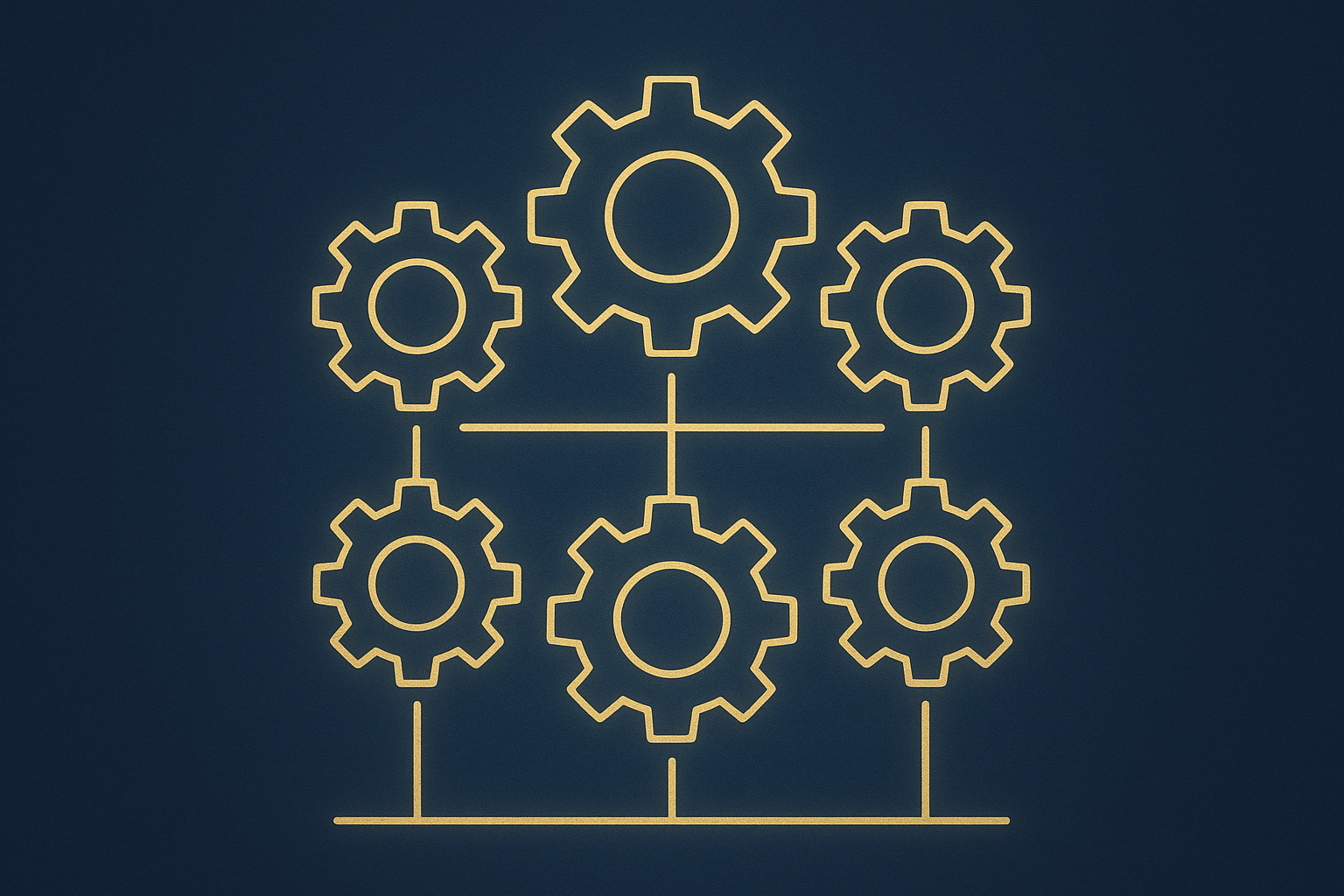
Each pillar of the framework adds a distinct lens to the prioritization decision.
Where to Start When Resources Are Limited
Smaller health systems and nonprofits often worry they lack the staff to run a full prioritization process. Fortunately, the process scales down without losing rigor.
In fact, a focused opportunity assessment can be completed in a matter of weeks rather than months, producing a short, ranked list instead of an exhaustive one. Similarly, organizations with limited internal bandwidth sometimes bring in a fractional advisor rather than hiring a full-time AI executive, which keeps costs proportional to the work needed. Above all, the goal is not perfection; it is a defensible, documented reason for why one initiative moves before another. Readers can review examples of this approach, along with broader context on AI's human implications, through the AI for Human Enrichment book series, which examines these trade-offs in depth.
Frequently Asked Questions About Prioritization in Healthcare AI
What is prioritization in responsible AI implementation?
Prioritization in responsible AI implementation is the structured process of deciding which AI projects, risks, or communities get attention and resources first. It weighs equity impact, feasibility, and cost together instead of ranking initiatives by technical readiness alone.
How does prioritization differ from a standard AI roadmap?
A roadmap lists what will be built and when, while prioritization decides the order based on equity risk, patient impact, and organizational readiness. In other words, prioritization shapes the roadmap rather than replacing it.
Why does health equity require prioritization before AI adoption?
Health equity requires prioritization because AI tools can quietly widen disparities if deployed without sequencing. Addressing the highest-risk populations and use cases first helps prevent harm before scale makes it harder to correct.
What role does the AI4EQUITY framework play in prioritization?
The AI4EQUITY framework provides six pillars, Evaluation, Quantify, Understanding, Identity, Translation, and Yield, that organizations move through to prioritize AI initiatives responsibly. Each pillar surfaces a different equity or performance consideration before resources are committed.
How long does an AI opportunity assessment take?
Most AI opportunity assessments take four to eight weeks, depending on organizational size and data access. The assessment typically concludes with a prioritized list of initiatives ranked by equity impact and readiness.
Who controls and owns our data once an AI prioritization process begins?
Your organization retains ownership of its data throughout any prioritization or advisory engagement. A credible advisor documents data governance terms in writing before any assessment work begins, and never sells or licenses that information to third parties.
What's inside the data centers sprouting up to support AI?
Data centers house the servers, cooling systems, and networking infrastructure that train and run AI models. For healthcare organizations, understanding this infrastructure matters less than understanding who can access the data moving through it.
Will AI replace humans as more jobs disappear?
AI is more likely to reshape specific tasks than eliminate entire healthcare professions outright. However, without deliberate prioritization of workforce impact, certain roles and communities face disproportionate disruption.
How come AI didn't make my job or life better?
Many AI tools were built to optimize cost or speed rather than human enrichment, so benefits often bypass the people doing the work. Prioritization frameworks exist specifically to put human need back at the center of AI decisions.
How do I and my children keep up with AI?
Keeping up with AI starts with understanding how it affects decision-making, learning, and attention in daily life, not mastering coding. Families benefit most from ongoing conversation and education about AI's human effects, not just its technical mechanics.
Why is there no real policy around AI development?
AI policy lags because technology evolves faster than legislative and regulatory processes, and political incentives rarely reward slow, careful governance. As a result, organizations often must build their own internal prioritization and accountability standards ahead of formal law.
What is a common mistake organizations make in AI prioritization?
The most common mistake is prioritizing AI projects by technical feasibility alone, ignoring who is affected and how. This approach often surfaces equity problems only after a tool has already scaled across patients or staff.
How much does a prioritization assessment typically cost?
Costs vary by organization size and scope, but most prioritization and opportunity assessments are scoped as fixed-fee engagements tied to a defined set of deliverables. Requesting a proposal is the most reliable way to get an accurate estimate.
What does a fractional Chief AI or Health Equity Advisor do for prioritization?
A fractional advisor leads prioritization decisions on a part-time basis, giving organizations senior-level judgment without a full executive hire. This role is especially useful for organizations early in their AI journey that need structured guidance before committing to larger investments.

Community dialogue is a core input, not an afterthought, in equitable prioritization.
Key Takeaways on Prioritization
Prioritization determines whether AI strengthens trust in a health system or quietly undermines it. Above all, the organizations that handle this well treat prioritization as an ongoing discipline, built on evaluation, community input, and accountability, rather than a one-time exercise before a launch date.
As AI adoption accelerates across health systems, life-science companies, and academic medical centers, the question is rarely whether to adopt AI at all. It is which initiative to prioritize first, for whom, and under what safeguards. Organizations ready to work through that question can review the AI4EQUITY™ approach or request a proposal to begin a structured assessment. For teams building internal literacy first, the AI for Human Enrichment series preorder page and upcoming speaking engagements offer additional starting points grounded in the same framework.