Healthcare AI Community Engagement: A Practical Guide
Healthcare AI community engagement means involving patients and communities in AI decisions. Learn the steps, pitfalls, and how to start today.

Healthcare AI community engagement is the practice of bringing patients, families, and local groups into decisions about how AI is chosen, built, tested, and monitored. I've spent my career at the intersection of health, ministry, and technology, and I've seen one pattern repeat. AI tools work best when the people they affect help shape them.
Quick answer: Start early, partner with trusted local groups, share real decision power, let residents validate every AI output, act on feedback, and report back. Engagement is a relationship, not a one-time survey.
Healthcare AI community engagement works best when community members sit at the table from the start.
What Is Healthcare AI Community Engagement?
It is a two-way partnership between health organizations and the people they serve. Community members help define the problem, review the data, test the tool, and judge the results. In contrast, a one-time listening session asks for opinions and then moves on.
This approach draws on community-based participatory research, where communities and researchers share power. For a deeper look, see our guide on how to engage communities in healthcare AI development.
Levels of Engagement: From Informing to Co-Leading
Not all involvement is equal. Consider where your project sits today:
- Inform: You tell people what the AI tool does. This is a starting point, not engagement.
- Consult: You ask for opinions, then decide alone.
- Collaborate: Community members help shape the problem, the design, and the rollout.
- Co-lead: Residents share decision power and help judge success.
Aim for collaboration or co-leadership. Therefore, ask for shared decisions, not just feedback.
Why Involving Patients and Communities Matters
AI learns from past data. Therefore, it can repeat past gaps in care. Communities often spot those gaps first, because they live with the results.
Trust is the second reason. People will not use a tool they do not understand or believe in. Moreover, the World Health Organization has published guidance on AI ethics in health that stresses inclusiveness, transparency, and accountability. Engagement puts those principles into practice.
At MinisterScientist.com, we treat trust, accountability, and cultural context as conditions of performance, alongside accuracy and cost. A tool that is accurate but distrusted does not help anyone.
Communities Already Know What Is Wrong
Residents rarely need experts to name their problems. What they need are accessible tools to turn insight into action. For example, the Stanford-based Our Voice initiative has trained residents in more than 30 countries to collect their own data, share it with neighbors, and present it to local decision-makers. In one project, youth in Cartagena, Colombia documented stagnant water and unpaved school routes, then used text-to-image AI to picture fixes such as drainage and covered trash bins. Local officials acted on what they saw.
How to Start Community Engagement in Healthcare AI
A first cycle can fit inside a 90-day action plan. Follow these steps in order.
- Name the communities affected. List every group the tool will touch, including those it may leave out.
- Build trusted partnerships. Approach clinics, faith groups, and advocacy organizations. Ask how they want to take part.
- Share power and decisions. Give community members a vote and paid time.
- Test with the community. Review data sources, design, and early results together.
- Act on the feedback. Change the plan, then explain what changed and why.
- Monitor and report back. Track outcomes by group and share results on a set schedule.
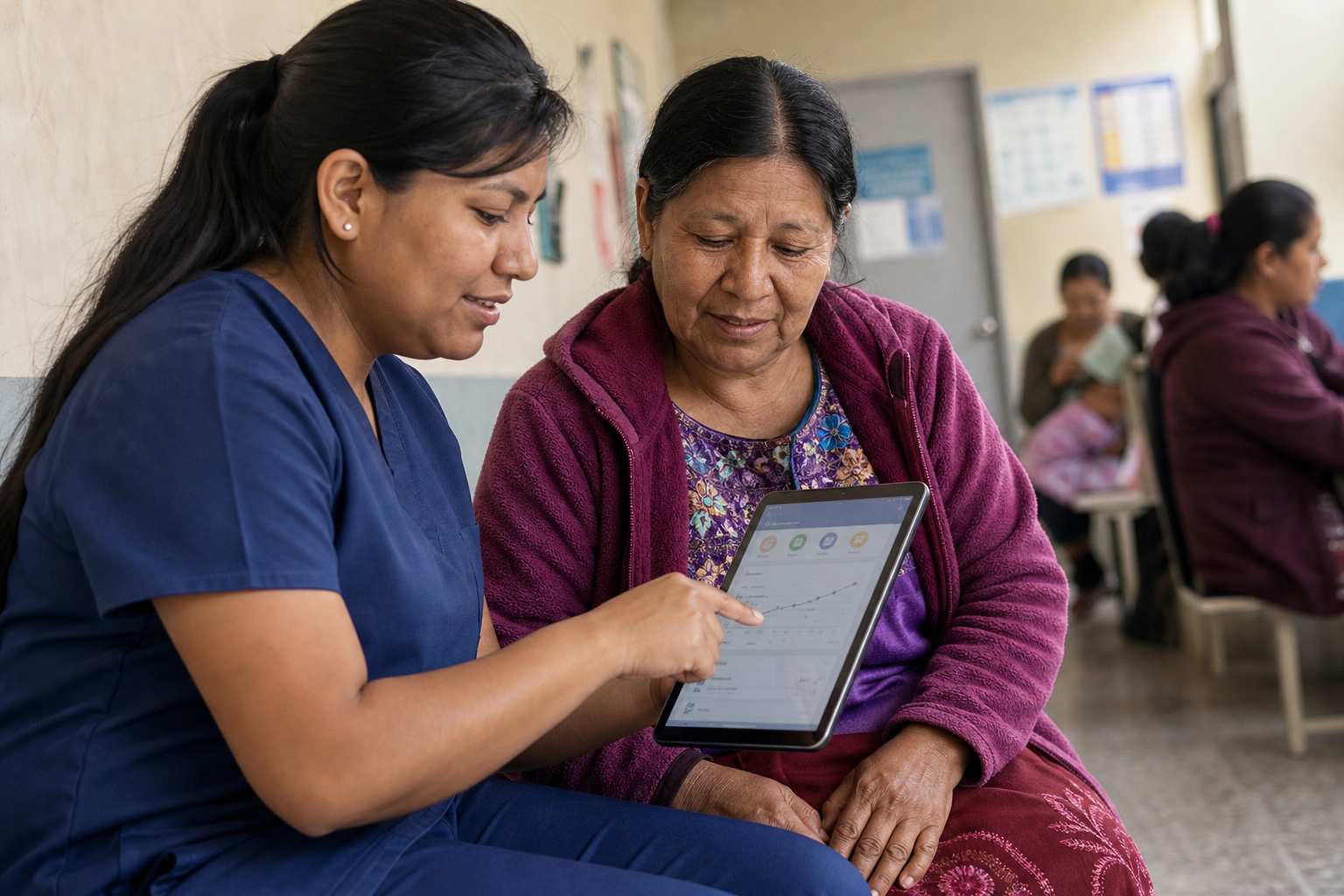
Trusted messengers help communities understand and shape the tools used in their care.
Making Participation Accessible for Everyone
Many barriers stop people from being heard. Language gaps, limited familiarity with how decisions get made, and discomfort with public speaking can all shrink who participates. As a result, the loudest voices win, not the most affected ones.
- Offer materials and meetings in the languages people speak at home.
- Use photos, maps, and plain language instead of technical slides.
- Meet in familiar places, at times that fit work and caregiving schedules.
- Teach residents how local decisions are made and who to approach.
- Offer several ways to contribute, such as writing, speaking, or photographing.
Using AI Itself to Strengthen Community Voice
AI can be more than the subject of engagement. Used well, it can help residents turn lived experience into clear visuals and arguments. In addition, hands-on use can build confidence and trust in the process.
Guardrails That Protect the Community
However, AI can produce false information or oversimplify complex realities. Over-reliance can also weaken the critical thinking that makes participation valuable. Use these safeguards:
- Have trained facilitators guide every AI interaction.
- Test prompts to reduce biased outputs.
- Share nothing with decision-makers until residents confirm it reflects their experience.
- Use secure, approved tools for any community data.
Technology should amplify the community's voice, never replace it.
Common Mistakes in Patient and Community Involvement
Several pitfalls appear again and again.
- Engaging only after the vendor is chosen.
- Listening but not changing anything.
- Treating one person as the voice of a whole community.
- Skipping payment for community expertise.
- Failing to report back on results.
Each mistake erodes trust. For related guidance, read how hospitals keep AI from worsening health disparities, why cultural context shapes trust, and how social context shapes healthcare AI outcomes.
Measuring Whether Engagement Is Working
Good intentions are not evidence. Specifically, track these signals with your community partners:
- How many design or policy changes came from community feedback.
- Whether outcomes are fair across groups.
- Whether trust and tool use are rising.
- Whether residents feel their sense of agency has grown.
Putting Engagement Into Your AI Strategy
Engagement should be built into governance, not added at the end. That means budgets, timelines, and clear roles for community partners. In addition, it helps to follow a structured approach, such as a responsible guide to AI assimilation in healthcare.
MinisterScientist.com offers AI equity and ethics assessments, responsible AI implementation strategy, and fractional advisory roles. The work is built on the AI4EQUITY™ Implementation Framework, which draws on community-based participatory research. Organizations that want support can explore our consulting services and request a proposal.
Frequently Asked Questions
What is healthcare AI community engagement?
It is the practice of involving patients, families, and local groups in how AI tools are chosen, built, tested, and monitored. It treats communities as partners, not just data sources.
Why does community engagement matter for healthcare AI?
It helps catch bias, builds trust, and keeps tools tied to real needs. Tools built without community input often fail the people they were meant to help.
Who should be involved in engagement?
Include patients, caregivers, frontline clinicians, community health workers, faith leaders, and advocates. Prioritize people who are most affected and least often heard.
When should engagement start?
Start before any vendor is chosen or any data is pulled. Early input shapes the problem itself, which is far cheaper than fixing a finished tool.
How is engagement different from a patient survey?
A survey collects opinions once. Engagement is an ongoing relationship in which community members share decisions and see results.
What is community-based participatory research?
It is a research approach in which community members and researchers work as equal partners. It is a strong model for healthcare AI because it shares power over questions, methods, and results.
How long does engagement take?
Initial partnerships can take several weeks, and a focused first cycle often fits within a 90-day plan. Real engagement continues for the life of the tool.
Should community members be paid?
Yes. Paying for time and expertise shows respect and makes participation possible for people with limited flexibility.
What are common mistakes?
Common mistakes include engaging too late, listening without acting, and relying on one community voice. Another is failing to report back on what changed.
How do you measure whether engagement is working?
Track whether feedback led to design changes, whether outcomes are fair across groups, and whether community trust is rising. Ask partners to help define these measures.
Does engagement slow down AI projects?
It adds early effort, but it reduces costly rework and failed rollouts later. Teams often save time overall.
Who controls and owns community data?
Ownership should be settled in writing before data is used. Communities should know who holds their data, for what purpose, and how to withdraw it.
Can communities use AI tools themselves?
Yes, with support. Trained facilitators, bias-tested prompts, and resident validation of every output keep the process safe and keep the community's voice first.
Conclusion
Healthcare AI community engagement turns good intentions into tools people trust and benefit from. Name who is affected, partner early, make participation accessible, share decisions, validate AI outputs with residents, act on feedback, and report back. AI should enrich the people it touches, not just optimize around them. If your organization is ready to begin, request a proposal and let's plan your first 90 days together.
Privacy commitment: Information you share with this practice, through an inquiry, a book order, a speaking or advisory engagement, or any correspondence, belongs to you. We use it for one purpose only: to serve you well. It is never sold, rented, licensed, or disclosed to third parties for marketing, advertising, resale, or referral. We do not participate in data brokerage of any kind, and we never will.
