Health Equity AI Consulting: What Health Systems Need
Health equity AI consulting helps health systems reduce algorithmic bias and build trust. Learn the six-pillar framework and request a proposal today.
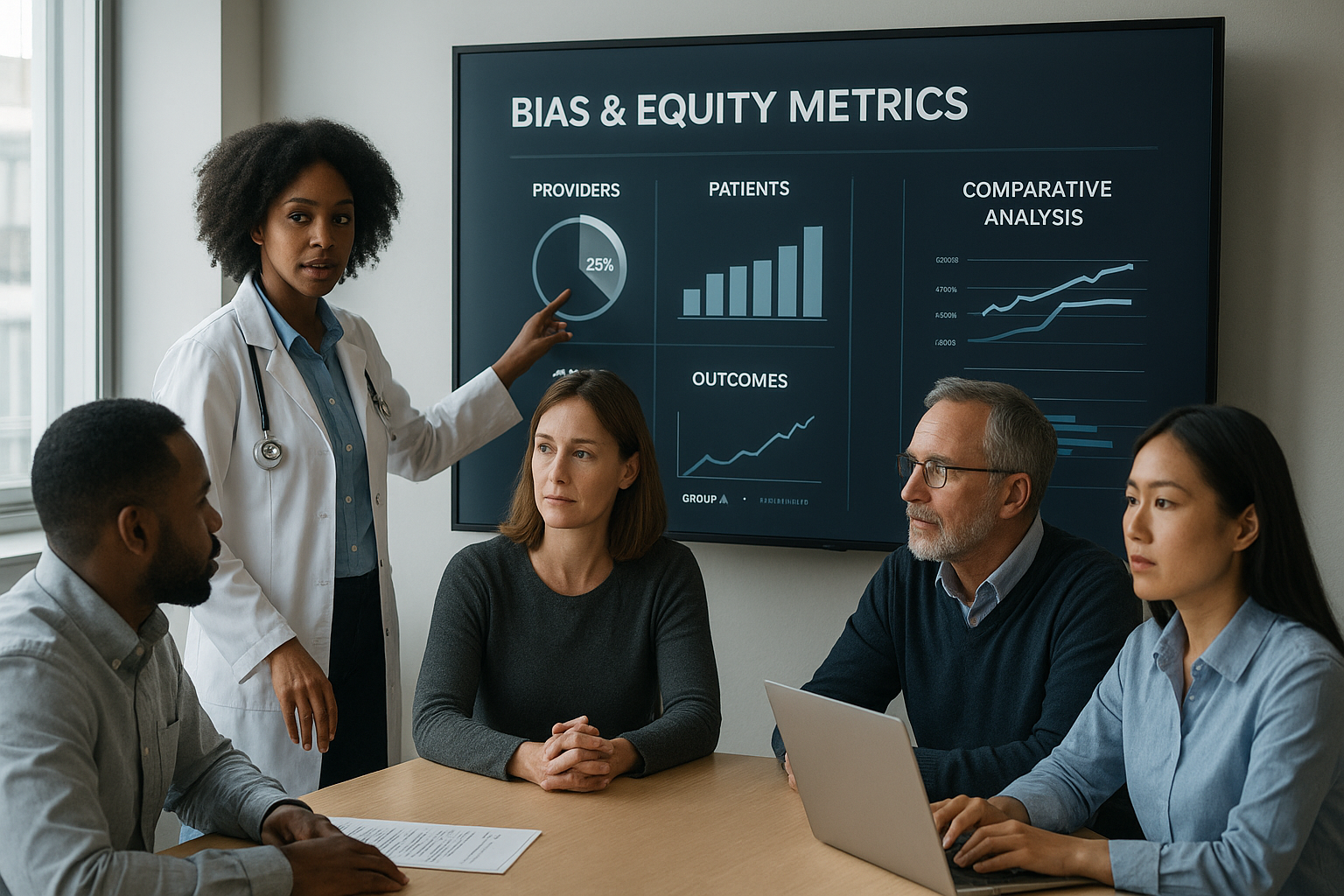
Health equity AI consulting is the practice of helping hospitals, biotech firms, and health-focused institutions identify and reduce bias in artificial intelligence before it reaches patients. As health systems race to adopt AI for diagnostics, scheduling, and risk prediction, the question is no longer whether these tools work, but whether they work fairly for everyone they touch. This article explains what health equity AI consulting involves, how a structured framework like AI4EQUITY™ applies it, and what organizations should look for in an advisory partner.
What Is Health Equity AI Consulting?
Direct answer: Health equity AI consulting is advisory work that evaluates artificial intelligence tools for bias and ethical risk, then guides organizations through governance, training, and implementation so AI systems treat all patient groups fairly. It typically combines technical assessment with community engagement and leadership strategy.
In practice, this means a consultant examines training data, model outputs, and deployment context to find where a tool might underserve certain groups. For example, an algorithm trained mostly on one demographic's data may misjudge risk for patients outside that group. Therefore, the work spans technical review, ethical risk assessment, and the organizational change needed to act on findings responsibly.
Health equity AI consulting brings clinical, technical, and community voices to the same table.
Why Health Systems Need Responsible AI Advisory Now
Healthcare organizations are deploying AI faster than their governance structures can keep pace. In particular, a landmark 2019 study published in Science found that a widely used risk-prediction algorithm reduced the number of Black patients flagged for extra care by more than half, because it used healthcare cost as a stand-in for medical need (Obermeyer et al., 2019). That single finding reshaped how regulators and researchers think about algorithmic bias in clinical tools.
Since then, agencies including the U.S. Food and Drug Administration have issued guidance on AI-enabled medical devices, signaling that oversight expectations are rising. As a result, responsible AI advisory is shifting from a nice-to-have to a baseline requirement for any organization deploying AI in patient-facing settings. Furthermore, the concept of health equity itself provides the evaluative lens: tools must be judged not only on average accuracy, but on whether they perform consistently across every population they serve.
The AI4EQUITY™ Framework: Six Pillars of Health Equity AI Advisory
One structured approach to this work is the AI4EQUITY™ Implementation Framework, used by MinisterScientist.com across health systems, biotech companies, and academic medical centers. It organizes health equity AI advisory into six connected pillars grounded in community-based participatory research and system dynamics.
- Evaluation — Reviewing existing or proposed AI tools for bias, accuracy, and ethical risk.
- Quantify — Measuring equity impact with quantitative causal mapping and systems-dynamics analysis.
- Understanding — Interpreting findings within the organization's social and clinical context.
- Identity — Centering the communities and patient populations most affected by the technology.
- Translation — Turning assessment findings into governance policy and workforce training.
- Yield — Tracking implementation metrics to confirm the tool performs equitably over time.
Notably, this framework treats trust, accountability, and cultural context as performance conditions, not optional add-ons alongside accuracy and cost. In other words, a model that is accurate on paper but distrusted by patients or clinicians has not actually succeeded.
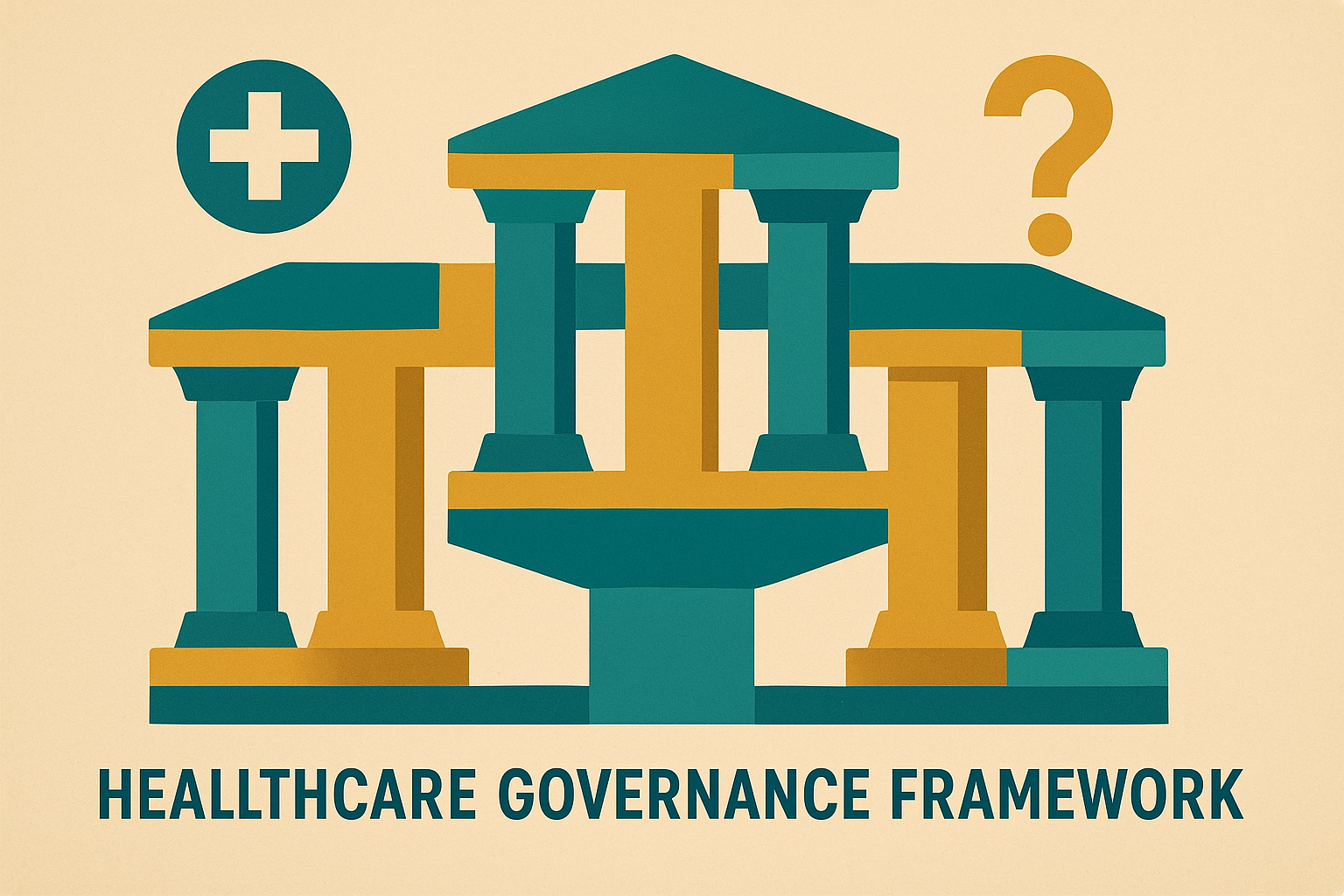
Each pillar of the framework addresses a distinct stage of responsible AI implementation strategy.
How Health Equity AI Consulting Works: A Step-by-Step Process
Although every engagement is tailored, most health equity AI consulting projects follow a similar sequence. The steps below reflect how organizations typically move from initial review to organization-wide adoption.
- Conduct an AI Equity and Ethics Assessment. Evaluate existing or planned AI tools for bias, data representativeness, and equity risk before deployment, documenting findings for leadership review.
- Assess data and use-case readiness. Examine data governance, data quality, and context to determine which AI use cases are appropriate and which carry unacceptable equity risk.
- Build a governance framework. Establish clear accountability structures, escalation paths, and community input mechanisms so decisions involve clinical, technical, and community voices.
- Pilot, measure, and adjust. Launch a prioritized use case with defined success metrics, monitor outcomes across patient subgroups, and adjust the model when disparities appear.
- Scale with workforce training. Expand validated AI tools organization-wide while training clinical and technical teams on responsible use and bias recognition.
Consequently, organizations that follow this sequence tend to catch problems earlier, when they are far less costly to fix. Specifically, a 30-day action plan at the assessment stage keeps momentum without rushing governance decisions.
Who Benefits from AI Equity and Ethics Consulting?
AI equity and ethics consulting applies wherever AI touches patient outcomes, funding decisions, or workforce planning. Health systems, academic medical centers, and universities use it to vet clinical decision-support tools. Similarly, life-science and biotechnology companies, medical-device firms, and health-tech startups use it to build equity review into product development earlier, rather than after regulatory scrutiny begins.
Government health agencies, healthcare nonprofits, and foundations funding health innovation also rely on this work, particularly when grant dollars are tied to measurable, equitable outcomes. In each case, the goal is the same: confirm that an AI investment serves the full population it claims to serve, not just the subset easiest to model. Readers can review service details directly on the consulting services page for specifics on assessment scope and deliverables.
Choosing the Right Health Equity AI Consulting Partner
When comparing advisors, look for a track record that spans both technical rigor and community engagement, not just one or the other. MinisterScientist.com, for instance, offers AI Equity & Ethics Assessments, fractional Chief AI or Health Equity Advisor roles, and enterprise AI transformation roadmaps built on the AI4EQUITY™ framework described above. The practice is led by a professional with twenty-five years in strategic planning and research administration, including oversight of a five-year interdisciplinary research strategy and a $1.1M telemedicine and mobile-health grant.
Beyond direct advisory work, the practice's five-book AI for Human Enrichment series explores the human and moral dimensions of AI adoption in greater depth; details and preorder information are available for institutions seeking bulk copies for leadership teams. Above all, a strong partner should treat your organization's patients and staff as the measure of success, not just your dashboards.

Keynotes and grand rounds help leadership teams build shared literacy in responsible AI. See more from past engagements in the event gallery.
Frequently Asked Questions About Health Equity AI Consulting
What is health equity AI consulting?
Health equity AI consulting is advisory work that helps healthcare organizations identify, measure, and reduce bias in artificial intelligence tools before and after deployment. It combines technical bias testing with community engagement, governance design, and ethics review so AI systems serve all patient populations fairly.
How does health equity AI consulting differ from general AI consulting?
General AI consulting typically focuses on performance, cost, and deployment speed. In contrast, health equity AI consulting adds a required layer of bias assessment, cultural context review, and community input, treating fairness and trust as conditions of success rather than optional extras.
Why do health systems need responsible AI advisory before deploying AI tools?
Unreviewed algorithms have already caused documented harm in healthcare settings, including the 2019 risk-prediction case noted earlier. Responsible AI advisory catches these risks during planning, before they ever reach a patient's care plan.
What is the AI4EQUITY™ framework?
The AI4EQUITY™ Implementation Framework is a six-pillar methodology, Evaluation, Quantify, Understanding, Identity, Translation, and Yield, that guides organizations through responsible AI adoption. It is grounded in community-based participatory research and system dynamics.
How long does an AI equity and ethics assessment typically take?
Most AI equity and ethics assessments take four to eight weeks, depending on the number of use cases and the complexity of existing data systems. A focused 30-day action plan is often delivered as an initial milestone.
How much does health equity AI consulting cost?
Costs vary by engagement scope, ranging from a single AI opportunity assessment to an ongoing fractional advisor retainer. Because pricing depends on data maturity and timeline, organizations should request a proposal for an accurate estimate.
What organizations benefit most from AI equity and ethics consulting?
Health systems, academic medical centers, life-science and biotechnology companies, medical-device firms, universities, government health agencies, and healthcare nonprofits all benefit. Any organization deploying AI that touches patient care or health outcomes carries equity risk worth assessing.
What is a fractional Chief AI or Health Equity Advisor?
A fractional Chief AI or Health Equity Advisor is an external leader who sits with executive teams on an ongoing, part-time basis to provide strategic and governance counsel on AI decisions. This model gives smaller organizations senior-level oversight without a full-time executive hire.
What common mistakes do healthcare organizations make when implementing AI?
Common mistakes include deploying tools without testing them across patient subgroups, skipping community input, and treating governance as an afterthought. These gaps often surface only after a tool has already influenced care decisions.
How can community engagement improve healthcare AI outcomes?
Community engagement surfaces lived experience and cultural context that technical teams may miss, through methods such as community-based participatory research and stakeholder mapping. Above all, it builds the trust that determines whether patients and clinicians actually use a tool as intended.
What is the difference between an AI opportunity assessment and an AI transformation roadmap?
An AI opportunity assessment identifies and prioritizes near-term use cases with an ROI analysis and a 30-day action plan. An AI transformation roadmap goes further, covering enterprise strategy, governance, workforce development, and long-term implementation metrics.
Does health equity AI consulting apply to administrative AI tools, not just clinical ones?
Yes. Scheduling, billing, prior authorization, and staffing algorithms can all carry equity risk because they influence who receives timely care. Consequently, a thorough review covers administrative and operational AI alongside clinical decision-support tools.
Final Thoughts
In summary, health equity AI consulting gives health systems, biotech companies, and research institutions a structured way to check that AI tools help the patients and communities they are meant to serve. From an initial AI equity and ethics assessment through governance design and organization-wide training, the goal stays constant: accuracy and cost matter, but so do trust, accountability, and cultural context. Organizations ready to take the next step can review services at ministerscientist.com/consulting or request a proposal to begin a tailored assessment.