Ethical Risk Assessment in Healthcare AI: 2026 Guide
An ethical risk assessment evaluates healthcare AI for bias, trust, and dignity risks. Learn the AI4EQUITY framework and request a proposal today.
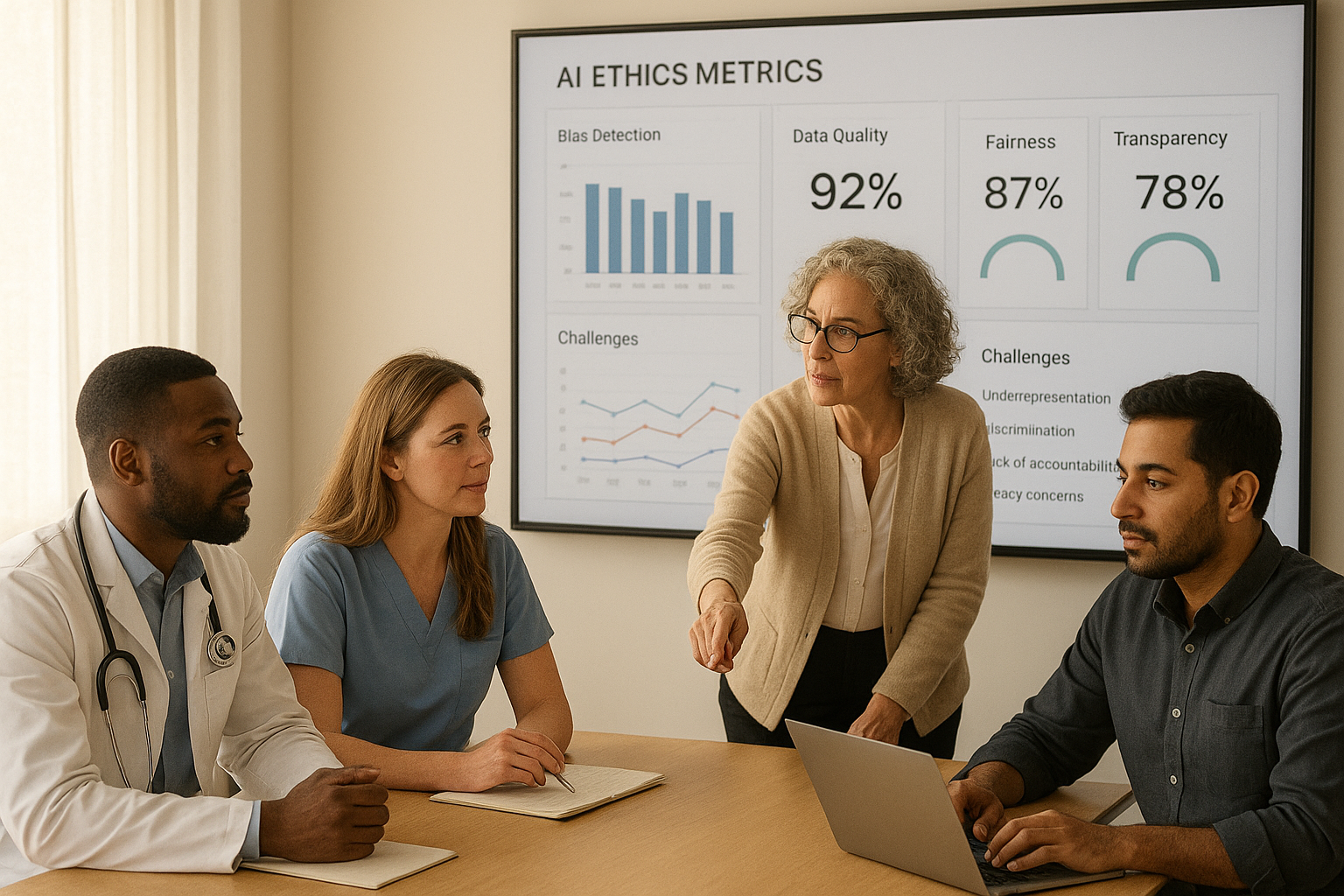
An ethical risk assessment is the structured process health systems, life-science companies, and health-tech firms use to find out how an AI tool could harm dignity, fairness, privacy, or trust before that harm reaches a patient. As a result, it has become one of the most urgent steps in responsible AI implementation across healthcare and biotechnology.
In particular, organizations are discovering that technical accuracy is not enough. A model can be statistically precise and still fail patients, clinicians, or entire communities if nobody checked for bias, consent gaps, or accountability blind spots. This guide walks through what an ethical risk assessment actually involves, why it matters now, and how the AI4EQUITY™ framework turns the process into a repeatable practice rather than a one-time checkbox.
An ethical risk assessment brings clinicians, data scientists, and community voices into the same room before an AI tool goes live.
What Is an Ethical Risk Assessment in Healthcare AI?
An ethical risk assessment is a review that maps an AI system's data, logic, and outcomes against the people it affects, specifically looking for bias, dignity violations, and accountability gaps. Unlike a security audit, it asks not just "is the data safe?" but "is the outcome fair, and who gets hurt if it isn't?"
For example, a 2019 study published in Science found that a widely used commercial health algorithm, applied to roughly 200 million people in U.S. health systems, systematically underestimated the needs of Black patients because it used healthcare spending as a proxy for illness. That single flawed assumption, caught after the fact, illustrates exactly what an ethical risk assessment is designed to catch beforehand. You can read the original analysis through the National Library of Medicine's summary of the research.
Consequently, most mature assessments combine quantitative testing, such as measuring error rates across demographic groups, with qualitative work, including interviews with patients and frontline staff who interact with the tool daily.
Why Health Systems Need an AI Ethics Risk Review
Healthcare AI increasingly shapes who gets screened, who gets flagged as high-risk, and who gets a callback from a care team. Therefore, an AI ethics risk review is no longer optional for organizations that take patient trust seriously.
In addition, the World Health Organization's guidance on AI ethics in health specifically names accountability, transparency, and inclusiveness as governing principles, not optional extras. Similarly, the broader field of AI ethics has matured around the idea that fairness and accuracy are both conditions of performance, not competing priorities.
Above all, patients and clinicians notice when a system feels impersonal or unfair, even if they cannot name the specific algorithm causing it. That erosion of trust has operational costs, including lower adoption, workarounds, and reputational damage that outlasts any single software update.
Direct Answer
An ethical risk assessment evaluates an AI system for bias, dignity, and trust risks across the people it touches, not just its technical accuracy. It should happen before deployment and again at regular intervals afterward, since real-world performance can drift from lab results.
The AI4EQUITY™ Framework: Six Pillars of a Responsible AI Risk Evaluation
The AI4EQUITY™ Implementation Framework organizes a responsible AI risk evaluation into six connected pillars, grounded in community-based participatory research and system dynamics. Rather than treating ethics as a separate checklist, it folds trust and cultural context directly into how performance is measured.
Evaluation, Quantify, and Understanding
The first three pillars focus on seeing the system clearly. Evaluation maps the AI tool end to end. Quantify puts real numbers on potential harm and benefit. Understanding brings in the lived experience of patients and staff, since numbers alone rarely reveal how a tool feels to the person on the receiving end of it.
Identity, Translation, and Yield
The second three pillars turn insight into action. Identity examines how performance shifts across racial, cultural, and socioeconomic groups. Translation converts findings into a concrete implementation plan with named owners. Yield tracks whether trust and outcomes actually improved after rollout, feeding results back into the next review cycle.
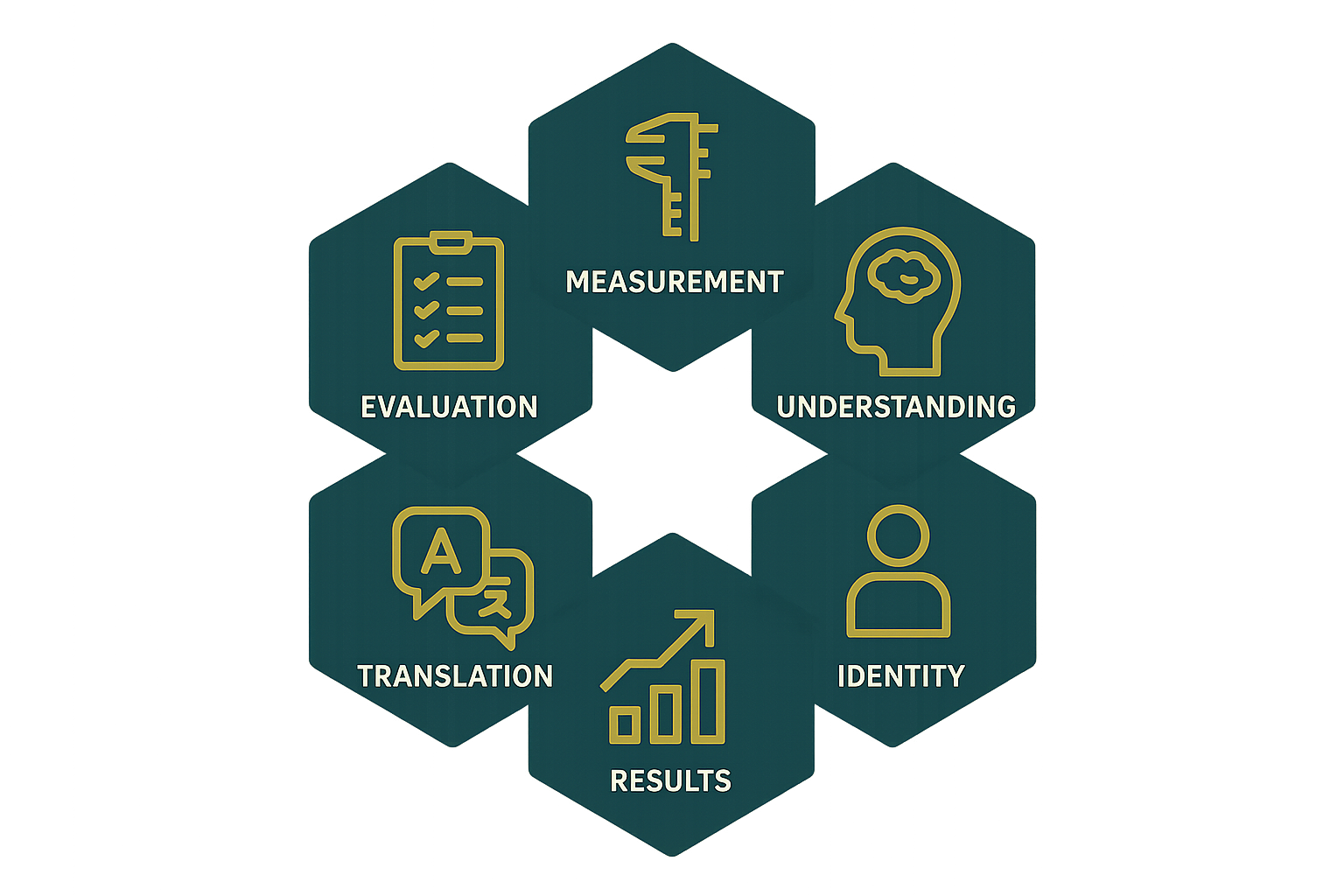
Each pillar of the framework feeds the next, turning a single ethical risk assessment into a continuous practice.
How to Conduct an Ethical Risk Assessment: A 6-Step Process
While every organization adapts the details, the underlying steps of an ethical risk assessment stay consistent. Below is the general sequence most teams follow, mirrored directly from the six pillars above.
- Evaluate the system. Map the AI tool end to end, documenting data sources, model purpose, and every point where it touches a patient, clinician, or community decision.
- Quantify the risk. Measure the scale of potential harm and benefit using real figures, such as how many patients or records the system affects and under what conditions.
- Understand lived experience. Interview clinicians, patients, and frontline staff, since statistics alone rarely capture trust or dignity concerns tied to the tool.
- Check identity and equity. Examine how the system performs across different racial, cultural, linguistic, and socioeconomic groups to surface hidden disparities.
- Translate findings into action. Build an implementation plan with named owners, timelines, and specific changes to training, consent, or monitoring processes.
- Measure the yield. Track outcomes after deployment to confirm whether trust and equity actually improved, then feed results into the next review cycle.
Many health systems run this process inside a 90-day action plan, which is enough time to move from evaluation through an initial translation plan without losing momentum. For organizations building this capacity internally, executive briefings and grand rounds can help leadership and clinical staff understand the stakes before the formal review even begins.
Common Mistakes in AI Risk and Ethics Reviews
Even well-intentioned teams make predictable mistakes. Recognizing them early saves time and protects patients.
First, many organizations treat the review as a one-time compliance exercise rather than an ongoing practice. Second, they often exclude the communities most affected by the tool, which means blind spots go unnoticed until after deployment. Third, teams frequently focus only on model accuracy and skip questions about consent, data ownership, and downstream job impact. Finally, some organizations assign the review entirely to the vendor building the AI system, which removes the independence a genuine ethical risk assessment requires.
In contrast, organizations that succeed tend to involve people outside the technical team, document every decision transparently, and revisit their findings after the tool goes live rather than filing the report away.
Who Should Commission This Kind of Health Equity Risk Review?
Health systems, academic medical centers, medical-device companies, and health-tech firms piloting new AI tools are the most common candidates for a formal health equity risk review. Government health agencies and healthcare nonprofits funding AI pilots also benefit, particularly when grant dollars carry an obligation to demonstrate responsible deployment.
Similarly, organizations without a dedicated internal ethics function often rely on a fractional Chief AI or Health Equity Advisor to lead the process independently. This arrangement gives smaller organizations access to the same rigor as larger institutions without building an entire department from scratch. Learn more about how this role works through available advisory engagements.
A note on your information: Information you share with this practice — through an inquiry, a book order, a speaking or advisory engagement, or any correspondence — belongs to you. We use it for one purpose only: to serve you well. It is never sold, rented, licensed, or disclosed to third parties for marketing, advertising, resale, or referral. We do not participate in data brokerage of any kind, and we never will.

A fractional advisor can lead an ethical risk assessment with the independence internal teams sometimes lack.
Frequently Asked Questions About Ethical Risk Assessment
What is an ethical risk assessment in AI implementation?
An ethical risk assessment is a structured review that identifies how an AI system could harm dignity, fairness, privacy, or trust before it reaches patients. It examines data sources, model behavior, and affected communities, not just technical accuracy.
How do organizations conduct an ethical risk assessment?
Organizations typically follow a six-stage process that evaluates the AI system, quantifies potential harms, and translates findings into an implementation plan. This usually involves clinicians, data scientists, ethicists, and the communities the tool will affect.
Why is an ethical risk assessment important for healthcare AI?
Healthcare AI tools make decisions that affect diagnosis, treatment access, and resource allocation, so errors can cause real harm. An ethical risk assessment catches bias, consent gaps, and accountability failures before deployment rather than after patients are affected.
How does an ethical risk assessment differ from a technical security audit?
A security audit checks whether data is protected from breaches and unauthorized access. An ethical risk assessment goes further, examining whether the AI's outcomes are fair, whether consent was properly obtained, and whether affected communities were meaningfully included.
How much does an ethical risk assessment cost?
Costs vary with organization size and AI system complexity, ranging from a focused opportunity assessment to a full enterprise transformation roadmap. Most engagements are scoped around a defined action plan rather than an open-ended retainer.
How long does an ethical risk assessment take?
A focused assessment can often be completed within a 90-day action plan, covering evaluation through initial recommendations. Larger, enterprise-wide reviews involving multiple AI systems typically take longer.
What common mistakes undermine an ethical risk assessment?
The most common mistake is treating the review as a one-time compliance checkbox instead of an ongoing practice. Other frequent errors include skipping community input, ignoring downstream job impacts, and focusing only on model accuracy.
What best practices improve an ethical risk assessment?
Strong assessments involve people outside the technical team, document decisions transparently, and revisit findings after deployment. They also treat trust and cultural context as performance metrics, not afterthoughts.
Who should lead an ethical risk assessment inside a health system?
Ideally, a cross-functional team led by someone independent of the AI vendor relationship, such as a fractional Chief AI or Health Equity Advisor, leads the review. This independence helps surface problems that internal teams might overlook or hesitate to raise.
Who controls and owns the data used in an AI ethical risk assessment?
Data ownership should remain with the patients and institutions it originated from, not the AI vendor. A proper ethical risk assessment documents exactly who controls, stores, and can use that data at every stage.
Why is there no consistent policy governing AI ethics reviews?
Regulation has not kept pace with how quickly AI tools are deployed in clinical and research settings. As a result, organizations that want real accountability often need to build their own ethical risk assessment practice rather than wait for mandatory standards.
Will AI replace healthcare jobs, and does an ethical risk assessment address this?
AI is more likely to reshape healthcare roles than eliminate them outright, but the transition still carries real risk for workers. A thorough ethical risk assessment specifically evaluates workforce impact so organizations can plan transitions responsibly instead of reactively.
Conclusion: Making the Ethical Risk Assessment a Standing Practice
Ultimately, an ethical risk assessment works best when it becomes a standing practice rather than a one-time report filed away after launch. Health systems, life-science companies, and academic medical centers that build this review into their regular AI governance protect patients, strengthen trust, and catch problems while they are still cheap to fix.
For a deeper look at the human dimensions behind this work, explore the AI for Human Enrichment book series or preorder the newest volume. Organizations ready to put a structured ethical risk assessment in place can visit MinisterScientist.com to request a proposal and start a 90-day action plan built around the AI4EQUITY™ framework.