Equity Risk Identification in Healthcare AI Systems
Equity risk identification helps health systems spot AI bias before harm occurs. Learn the AI4EQUITY™ framework and request a proposal today.

Equity risk identification is the structured practice of finding where an artificial intelligence (AI) system — software that learns patterns from data to make predictions or decisions — might unintentionally disadvantage a patient population before that harm reaches a clinic, a claims system, or a community health program. Health systems, life-science companies, and academic medical centers increasingly deploy predictive algorithms for everything from sepsis alerts to resource allocation, yet few organizations pause to ask who might be left out. This gap matters because overlooked bias in a clinical algorithm does not stay theoretical; it shows up as a missed diagnosis, a denied referral, or a longer wait time for the patients who already face the steepest barriers to care.
Consequently, organizations preparing to scale AI across a health system or research enterprise need a repeatable way to surface these risks early — not a one-off explainer they watch once and forget. This guide walks through what equity risk identification involves, why it matters more than ever in 2024 and beyond, and how a structured framework such as AI4EQUITY™ applies it in practice, step by step. For a deeper walkthrough of the broader assessment process, the AI equity and ethics assessment guide is a useful companion resource.
- What you'll learn: a precise definition, a repeatable 7-step process, the mistakes that sink most reviews, how this differs from a bias audit, and which fairness metrics actually matter.
- Who it's for: health system leaders, life-science compliance teams, data scientists, and clinicians evaluating any AI tool that touches patient care.
- Why now: AI-enabled medical devices have exploded past 950 FDA authorizations, and most were never tested for subgroup performance before launch.
Equity risk identification starts with reviewing how an AI system performs across different patient groups, not just on average.
What Is Equity Risk Identification in Healthcare AI?
Equity risk identification is the process of systematically reviewing AI data, model design, and deployment context to find features, proxies, or workflows that could produce unequal outcomes across race, income, language, geography, or disability status. Importantly, it happens before, during, and after deployment — never as a one-time compliance checkbox filed away after launch.
In practice, this means examining the training data for who is overrepresented or missing, testing model outputs separately for each demographic subgroup, and mapping how clinicians and administrative staff actually use the tool day to day. As a result, equity risk identification treats fairness as something to be measured directly, much like an organization measures accuracy or cost. According to established definitions of health equity, fair access to care requires removing avoidable, unjust differences between groups — a standard that an AI system must also meet if it influences clinical or administrative decisions.
In other words, identifying equity risk is not a single question with a yes-or-no answer. It is an ongoing discipline that pairs quantitative subgroup testing with qualitative, human-centered review — because a model can pass every statistical test in a lab and still fail the patients who interact with it in a rushed, under-resourced clinic.
Why Spotting Equity Risk Matters for Health Organizations
Health technology has moved quickly. In fact, the U.S. Food and Drug Administration had authorized well over 950 AI- and machine-learning-enabled medical devices as of 2024, a figure documented on the FDA's AI-enabled device list. However, regulatory clearance for safety and effectiveness does not automatically confirm that a tool performs equally well across every patient group it touches.
Therefore, spotting equity risk early protects three things at once: patient safety, organizational trust, and financial return. A biased triage algorithm, for example, can quietly erode community trust long before it triggers a formal complaint. In addition, organizations that skip this step often discover problems only after a costly retraining cycle. For context on calculating the financial side of this work, see this guide to measuring ROI for AI opportunity assessments. The CDC's health equity resources likewise emphasize that structural gaps in data collection routinely translate into structural gaps in technology performance.
Above all, the cost of skipping equity risk identification rarely shows up on day one. Instead, it compounds quietly — a few missed alerts here, a delayed referral there — until an audit, a lawsuit, or a news story forces the organization to confront a problem that could have been caught in week two of a review.
Why a Quick Video Overview Isn't Enough for Equity Risk Identification
Plenty of short explainer videos introduce the general idea of equity risk in a few minutes. That format works for building awareness, but it falls short the moment your team needs a repeatable process. Specifically, a video cannot be searched for the exact fairness metric you need mid-review, cannot be cited in a compliance document, and offers no way to track which of its recommendations your organization has actually implemented.
By contrast, a written, structured reference like this one lets a data scientist jump straight to subgroup testing methodology, lets a compliance officer copy a mistake checklist into a governance policy, and lets a clinician skim the FAQ section for a plain-language answer during a staff meeting. In short, equity risk identification deserves documentation that your team can return to again and again — not a single viewing that fades from memory by the next model update.
How the AI4EQUITY™ Framework Pinpoints Equity Risks in AI Systems
The AI4EQUITY™ Implementation Framework organizes this work into six pillars: Evaluation, Quantify, Understanding, Identity, Translation, and Yield. Specifically, the Evaluation and Quantify pillars drive the technical side of the review, measuring subgroup performance and documenting gaps with numbers rather than assumptions. Meanwhile, the Understanding and Identity pillars bring in community-based participatory research, meaning the people most affected by the system help interpret what the data actually means for their lives.
Similarly, the World Health Organization's guidance on ethics and governance of AI for health calls for exactly this kind of participatory oversight, treating community voice as a condition of safe deployment rather than an afterthought. The Translation and Yield pillars then convert findings into an implementation roadmap, so the organization moves from "we found a risk" to "here is the 90-day plan to address it." Readers who want a closer look at how this applies to a full assessment can review what is involved in an AI opportunity assessment for health systems.
The Six Pillars at a Glance
- Evaluation: establishes the baseline performance of the AI system across the whole population.
- Quantify: breaks that baseline down by subgroup and assigns a measurable risk score to each gap found.
- Understanding: brings patients and frontline staff into the interpretation of what the numbers mean in daily practice.
- Identity: examines how a patient's identity — language, geography, disability, income — interacts with the tool's design.
- Translation: converts findings into a concrete remediation plan with owners and deadlines.
- Yield: measures whether the remediation actually closed the gap after it was implemented.

Community voice is treated as a condition of performance, not an afterthought, within the AI4EQUITY™ framework.
A 7-Step Process for Equity Risk Identification Before Launch
Above all, a repeatable process keeps equity risk identification from becoming a one-time exercise. The following sequence reflects the core steps most health organizations follow, from first data pull to post-launch monitoring:
- Map the data lineage. Name every dataset, proxy variable, and historical record used to train or validate the model, including where the data originated, how it was collected, and which patient populations it actually represents.
- Segment outcomes by subgroup. Compare accuracy, false-positive, and false-negative rates across race, language, insurance status, geography, and disability status to see precisely where performance gaps appear and how large they are.
- Interview frontline staff and patients. Gather lived experience about how the tool is actually used in practice, because workflow shortcuts and alert fatigue often reintroduce bias that model metrics alone will never capture.
- Choose and apply fairness metrics. Select the statistical tests — such as demographic parity, equalized odds, or predictive parity — that match the clinical decision the AI system is making, since no single metric fits every use case.
- Log risks in a shared register. Assign an owner, a severity rating, and a remediation deadline to every flagged risk so identified problems do not quietly disappear into a filed-away report.
- Validate remediation before relaunch. Re-run the same subgroup tests after any fix to confirm the gap actually closed, rather than assuming a code change solved the underlying data or design problem.
- Re-test after every update. Repeat subgroup testing after any model update, data refresh, or new deployment site, since new training data or feature changes can reintroduce bias that was previously corrected.
Common Mistakes That Undermine Equity Risk Identification Efforts
Even well-intentioned teams stumble on a few predictable issues. For instance:
- Treating the initial review as a one-time task instead of repeating it with every model update.
- Relying only on aggregate accuracy scores instead of subgroup-level performance data.
- Excluding the community members the AI system affects from the evaluation itself.
- Assuming a fairness metric that passes in testing will hold once it meets real-world workflows.
- Failing to track and remediate flagged risks once the assessment report is filed away.
- Assuming a vendor-built tool is someone else's responsibility simply because your organization did not build the model.
In particular, the National Institute of Standards and Technology's AI Risk Management Framework stresses that risk management must be continuous and governed, not a single checkpoint before launch. This aligns directly with how equity risk identification should function inside a health organization's broader AI governance structure, alongside existing privacy, security, and clinical safety reviews.
How Equity Risk Reviews Differ From Traditional Bias Audits
A traditional bias audit often checks a narrow statistical measure, such as demographic parity, at a single point before deployment. By contrast, equity risk identification looks at the full ecosystem: data sourcing, clinical workflow, patient trust, organizational policy, and downstream impact on care access. In other words, a bias audit asks "does this number look fair?" while equity risk identification asks "who could be harmed, under what conditions, and what happens next?"
- Scope: a bias audit checks the model; equity risk identification checks the model, the workflow, and the community it serves.
- Timing: a bias audit usually happens once before launch; equity risk identification repeats across the entire AI lifecycle.
- Owner: a bias audit is often run solely by data scientists; equity risk identification is cross-functional by design, including clinicians and patients.
This broader lens also draws on system dynamics, a method for mapping how feedback loops across an organization reinforce or reduce a given risk over time. For readers exploring this methodology further, the article on causal loop mapping for healthcare AI ethics explains how these feedback loops are visualized in practice. Ultimately, organizations that only run a narrow audit may pass a compliance check while still missing the operational conditions that create inequitable outcomes.
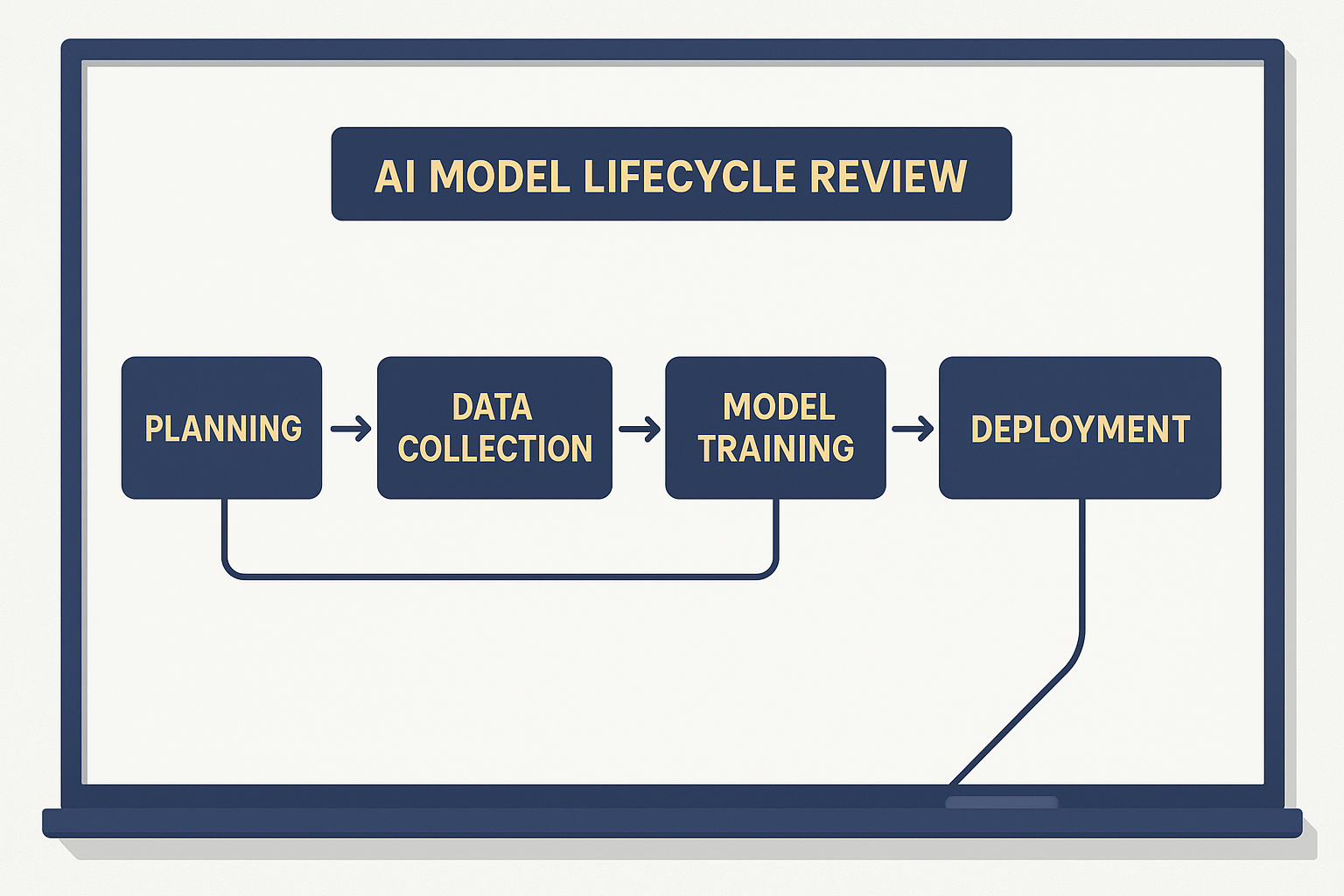
A repeatable, documented process is what separates a lasting equity review from a one-time checklist.
Fairness Metrics and Tools Used in Equity Risk Assessment
No single statistic captures fairness on its own. Instead, most equity risk identification programs draw from a small set of complementary metrics, applying whichever ones best match the clinical decision at hand.
- Demographic parity: checks whether the model flags each subgroup at roughly the same rate, useful for screening tools where equal access matters most.
- Equalized odds: checks whether true-positive and false-positive rates stay consistent across groups, useful for diagnostic tools where missed cases carry real harm.
- Predictive parity: checks whether a positive prediction means the same thing — the same likelihood of actually being correct — across groups.
- Calibration: checks whether a predicted risk score (say, a 70% risk of readmission) reflects the same real-world probability for every subgroup.
Consequently, the right choice of metric depends on the clinical question, not on which one is easiest to calculate. A team that picks a single convenient metric and calls the review finished is, in effect, choosing not to look for the risks that metric cannot detect.
Who Should Own Equity Risk Identification in Your Organization
Ideally, a cross-functional team of data scientists, clinicians, compliance staff, and patient representatives leads the review, since no single discipline can see the whole picture alone. Specifically, data scientists bring the statistical rigor, clinicians bring frontline context, compliance staff bring regulatory awareness, and patient representatives bring the lived experience that numbers alone cannot capture.
Many organizations also bring in an outside advisor, such as a fractional Chief AI/Health Equity Advisor, for an objective perspective that internal teams may struggle to provide on their own systems. This is particularly valuable for smaller health systems and life-science companies that do not yet have a dedicated AI governance function in place.
Frequently Asked Questions About Equity Risk Identification
What is equity risk identification?
Equity risk identification is the process of finding where an AI system might produce unequal outcomes across patient populations before deployment or during ongoing use. It combines data audits, subgroup performance testing, and community input to surface risks that technical metrics alone can miss.
Why is equity risk identification important in healthcare AI?
It matters because an algorithm that performs well on average can still fail a specific population, such as patients with limited English proficiency. Catching that gap early protects patients and reduces legal and clinical exposure for the organization.
How does equity risk identification differ from a standard bias audit?
A standard bias audit typically checks one or two fairness metrics at a single point in time. Equity risk identification repeats testing across the full AI lifecycle and considers community and policy context, not just code and data.
Who should lead an equity risk identification review?
Ideally a cross-functional team of data scientists, clinicians, compliance staff, and patient representatives leads the review. Many organizations bring in an outside advisor, such as a fractional Chief AI/Health Equity Advisor, for an objective perspective.
How long does an equity risk identification assessment take?
A focused assessment for a single AI tool commonly takes four to eight weeks, depending on the number of datasets and deployment settings reviewed. Larger enterprise-wide reviews can extend to several months.
What does equity risk identification cost?
Costs vary with system complexity and organization size. Many organizations begin with a scoped 90-day action plan to control cost and scope before committing to a larger enterprise engagement.
What is the most common mistake organizations make in equity risk identification?
The most common mistake is treating it as a one-time compliance exercise rather than an ongoing discipline repeated with every data, model, or use-case change.
Can equity risk identification slow down AI deployment timelines?
It can add review time upfront, but organizations typically save more time later by avoiding costly retraining or public trust failures caused by bias discovered after launch.
Does equity risk identification apply to AI tools built by outside vendors?
Yes. Vendor-built tools still need subgroup performance testing, since licensing an algorithm does not transfer away responsibility for how it performs on your patient population.
What frameworks support equity risk identification?
Frameworks such as the NIST AI Risk Management Framework and the AI4EQUITY™ Implementation Framework offer structured methodologies, with the latter built specifically around six pillars for healthcare and life-science organizations.
What happens after equity risk identification uncovers a problem?
The team documents the finding, assigns an owner and severity level, and builds a remediation plan, which may involve retraining the model, adjusting workflows, or adding human oversight at decision points.
Is equity risk identification only relevant for clinical algorithms?
No. It applies to administrative and operational AI as well, including scheduling tools, resource allocation models, and chatbots, because any system that touches patients can create unequal outcomes.
Which fairness metric should my team start with during equity risk identification?
Start with the metric that matches the clinical stakes: use equalized odds when missed diagnoses carry serious harm, and demographic parity when equal access to screening is the primary concern. Most mature programs eventually track several metrics together.
Final Thoughts on Reducing AI Equity Risk
In summary, equity risk identification gives health systems, life-science companies, and academic medical centers a structured way to find bias before it reaches a patient. It requires mapping data, testing subgroup performance, choosing the right fairness metrics, listening to the people the system affects, and repeating the process every time the technology changes. Frameworks like AI4EQUITY™ connect this technical work to the human context — trust, dignity, and accountability — that ultimately determines whether an AI tool helps or harms the people it touches.
Organizations ready to start this work can learn more about the available services at MinisterScientist.com or review the consulting offerings to request a proposal and begin a 90-day action plan.
Information you share with this practice — through an inquiry, a book order, a speaking or advisory engagement, or any correspondence — belongs to you. We use it for one purpose only: to serve you well. It is never sold, rented, licensed, or disclosed to third parties for marketing, advertising, resale, or referral. We do not participate in data brokerage of any kind, and we never will.
