AI Ethics Advisory Services for Health Systems & Biotech
Discover AI ethics advisory services built for health systems and life sciences. Request a proposal today to assess equity, risk, and responsible AI readiness.

AI ethics advisory services help health systems, life-science companies, and healthcare nonprofits build artificial intelligence programs that respect human dignity while still meeting performance goals. As AI moves deeper into clinical and administrative workflows, these services close the gap between technical capability and ethical accountability. For organizations deploying machine learning tools, meaning software that learns patterns from data to make predictions, this guidance has become essential rather than optional.
In particular, healthcare carries higher stakes than most industries that use AI. A biased scheduling algorithm is inconvenient; a biased diagnostic algorithm can cost lives. Therefore, organizations are increasingly turning to specialized advisors who understand both the technology and the human communities it affects.
AI ethics advisory services bring clinical, technical, and community voices into the same review process.
What Are AI Ethics Advisory Services?
AI ethics advisory services are consulting engagements that assess bias, equity risk, and governance gaps inside artificial intelligence systems, then guide organizations toward responsible, accountable implementation. They typically blend technical auditing, policy design, and direct input from the communities an AI tool will affect.
Specifically, this work looks at where training data came from, who it represents well, and who it leaves out. In addition, advisors examine how decisions made by an algorithm will be explained, appealed, and corrected when something goes wrong. According to the ethics of artificial intelligence literature, fairness, transparency, and accountability form the backbone of responsible AI practice across every sector, not just healthcare.
Why Health Systems Need Responsible AI Advisory Support
Healthcare data is messy, historical, and often shaped by decades of unequal access to care. Consequently, algorithms trained on that data can quietly repeat old inequities at digital scale. A widely cited 2019 study published in Science found that a health risk-prediction algorithm used on millions of patients systematically underestimated the needs of Black patients compared with equally sick white patients, largely because it used healthcare spending as a proxy for illness (Obermeyer et al., 2019, summarized by the National Institutes of Health).
That single example shows why technical accuracy alone is not enough. Instead, organizations need advisors who can trace a model's blind spots back to their root causes. The NIST AI Risk Management Framework now offers a national baseline for this kind of review, and many health systems pair it with sector-specific guidance focused on patient trust and clinical nuance.
The AI4EQUITY™ Framework Behind This AI Ethics Consulting Work
Not every AI ethics consulting approach is built the same way. MinisterScientist.com applies the AI4EQUITY™ Implementation Framework, a six-pillar methodology, Evaluation, Quantify, Understanding, Identity, Translation, and Yield, grounded in community-based participatory research and system dynamics. In contrast to purely technical audits, this approach treats trust, accountability, and cultural context as conditions of performance alongside accuracy and cost. A full overview of this methodology is available at MinisterScientist.com.
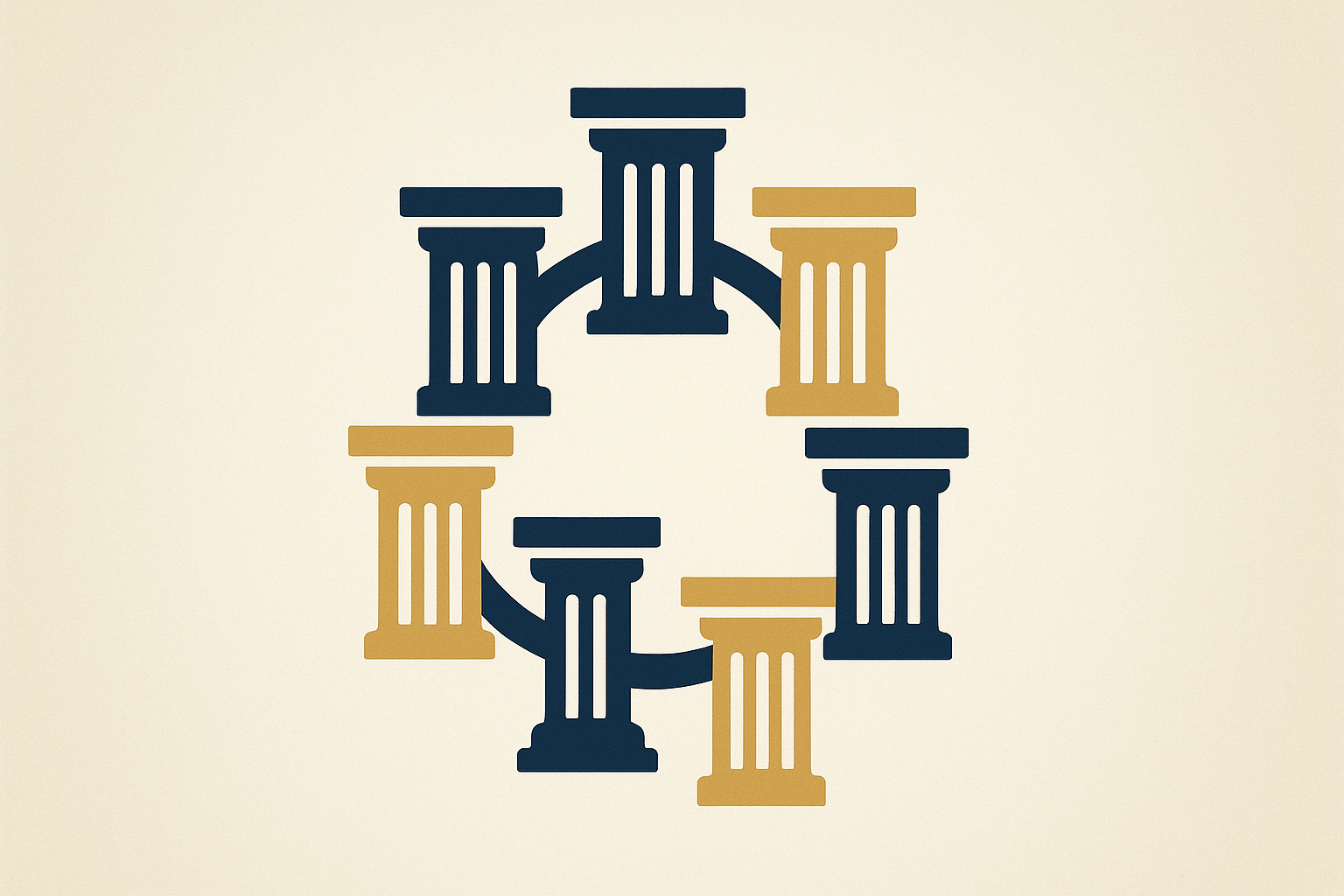
The six-pillar framework treats trust and context as part of performance, not an afterthought.
Core AI Ethics Advisory Services Offered to Healthcare and Life Sciences
AI ethics advisory services generally fall into a few connected categories. Understanding each one helps leadership teams decide where to start.
AI Equity & Ethics Assessment: identifies bias and ethical risk inside an existing or proposed AI tool.
AI Opportunity Assessment: reviews organizational readiness, ranks candidate use cases, and estimates return on investment.
AI Transformation Roadmap: sets enterprise strategy, governance structure, and workforce development plans.
Fractional Chief AI / Health Equity Advisor: places an experienced leader in an ongoing advisory seat without a full-time executive hire. Readers can review the complete service menu on the consulting services page.
How a Responsible AI Implementation Strategy Actually Works
Most engagements follow a similar sequence, regardless of organization size. The steps below outline that process.
- Assess use-case and data readiness. Advisors review the intended AI use case alongside the training data's representativeness and collection history to flag bias risk before any build or purchase decision proceeds.
- Build an equity and governance framework. The team drafts clear policies defining who approves AI use cases, how bias will be measured, and which escalation path applies when a concern surfaces.
- Pilot with community and stakeholder input. A limited pilot runs alongside structured feedback sessions with clinicians, patients, and community representatives to catch gaps that data alone cannot reveal.
- Scale with monitoring and accountability metrics. The tool expands only after the organization sets recurring monitoring metrics, names accountability owners, and establishes a reporting cadence.
Who Benefits From Biomedical Ethics Advisory and Health Equity Consulting
Health systems, academic medical centers, and government health agencies are obvious candidates. However, biomedical ethics advisory also matters for medical-device firms designing diagnostic algorithms, biotechnology companies running AI-assisted clinical trials, and foundations funding health innovation grants. Similarly, universities training the next generation of clinicians increasingly need this guidance woven into research design and grant administration.
For example, a research office managing a multi-year interdisciplinary grant benefits from the same equity lens applied to a hospital deploying a triage algorithm. Above all, any organization whose AI decisions touch a vulnerable population should treat this advisory work as core infrastructure, not an optional add-on.

Community listening sessions give biomedical ethics advisory work its real-world grounding.
Choosing a Partner for AI Ethics Advisory Services
When comparing providers, leadership teams should look for a track record that combines technical fluency with lived community engagement experience. MinisterScientist.com, operated by Community Development Enterprises for Innovation, offers exactly that combination: twenty-five years of strategic planning and research administration experience, a $1.1M telemedicine and mobile-health grant history, and the AI4EQUITY™ framework built specifically for health and life-science organizations.
Beyond one-time assessments, the firm also delivers keynotes, executive briefings, and workshops through its speaking engagements page, and explores the human dimensions of AI further in the five-book AI for Human Enrichment series, with new volumes available for preorder. Organizations ready to start can request a proposal directly through MinisterScientist.com.
Frequently Asked Questions
What are AI ethics advisory services?
AI ethics advisory services are consulting engagements that assess bias, equity risk, and governance gaps in artificial intelligence systems, then guide organizations toward responsible, accountable implementation. They typically combine technical review, stakeholder input, and policy design.
How do AI ethics advisory services differ from general AI consulting?
General AI consulting usually focuses on performance, cost, and deployment speed. In contrast, AI ethics advisory services add a dedicated lens on fairness, consent, cultural context, and accountability before and after launch.
Why do health systems need AI ethics advisory services more than other industries?
Health decisions carry life-or-death stakes, and biased algorithms can quietly worsen care for already underserved patients. As a result, health systems face higher regulatory and reputational exposure than many other sectors.
How much do AI ethics advisory services typically cost?
Costs vary by scope, ranging from a focused equity assessment on one algorithm to an ongoing fractional advisory retainer covering enterprise-wide governance. Most engagements begin with a scoped assessment before any long-term retainer is proposed.
How long does an AI equity and ethics assessment take?
A focused assessment on a single use case often takes four to eight weeks. Meanwhile, enterprise-wide reviews spanning multiple departments can take three to six months depending on data access and stakeholder availability.
What is the AI4EQUITY Implementation Framework?
The AI4EQUITY Implementation Framework is a six-pillar methodology, Evaluation, Quantify, Understanding, Identity, Translation, and Yield, grounded in community-based participatory research and system dynamics. Notably, it treats trust and cultural context as performance conditions, not afterthoughts.
What common mistakes happen when organizations skip AI ethics review?
Common mistakes include training models on unrepresentative data, ignoring frontline staff feedback, and launching tools without a bias-monitoring plan. Unfortunately, these gaps often surface only after harm has already occurred.
Who should hire a fractional Chief AI or Health Equity Advisor?
Organizations that need senior-level AI governance guidance but are not ready for a full-time executive hire benefit most. This includes mid-size health systems, growing biotech firms, and academic medical centers piloting new AI tools.
What is the difference between AI ethics and AI governance?
AI ethics focuses on the underlying values and fairness questions, while AI governance builds the policies, roles, and oversight structures that put those values into daily practice. Therefore, effective programs need both working together.
How does community-based participatory research improve AI equity?
Community-based participatory research brings affected patients and frontline workers directly into the design and review process. Consequently, it surfaces blind spots that purely technical audits often miss.
What industries benefit most from biomedical ethics advisory?
Health systems, life-science companies, medical-device firms, academic medical centers, and government health agencies benefit most. Each one handles sensitive patient data and high-stakes clinical decisions where ethical missteps carry real consequences.
What are best practices for implementing responsible AI in healthcare?
Best practices include auditing training data for representativeness, involving community stakeholders early, setting measurable equity metrics, and reviewing outcomes on a recurring schedule. Above all, accountability for outcomes should sit with named leaders, not vendors alone.
Conclusion
AI ethics advisory services give health systems, life-science companies, and healthcare nonprofits a structured way to pair technical performance with human accountability. As this article has shown, the real work happens through data audits, governance frameworks, community input, and ongoing monitoring, not a single checklist exercise. Ultimately, organizations that invest in this guidance early tend to avoid the costly bias scandals that have already affected well-known healthcare algorithms.
For health systems and life-science organizations ready to move forward, MinisterScientist.com offers AI ethics advisory services grounded in the AI4EQUITY™ framework, twenty-five years of research administration experience, and a genuine commitment to human dignity in technology decisions. Visit MinisterScientist.com to request a proposal and start the conversation.