30-Day Action Plan for Responsible AI in Healthcare
Build a 30-day action plan for responsible AI in healthcare. Get practical steps for equity, ethics, and governance—request a proposal today.

A 30-day action plan for responsible AI gives health systems, life-science companies, and academic medical centers a disciplined, time-bound way to move from good intentions to measurable action within one month. Instead of waiting on a sweeping governance overhaul, leaders can use these 30 days to evaluate current AI use, surface equity risks, and produce a written brief that guides every decision that follows. For organizations wrestling with questions about data ownership, job displacement, or whether AI is actually improving daily work, this short cycle offers a realistic first step.
A focused first month turns responsible AI from an abstract goal into a working 30-day action plan.
What Is a 30-Day Action Plan for Responsible AI?
A 30-day action plan is a structured, one-month process that evaluates existing AI use, quantifies risk, and produces a written recommendation before an organization commits further budget. It is not a full governance framework; rather, it is the diagnostic step that makes a later framework credible.
Healthcare organizations often skip straight to procurement when a new AI tool looks promising. However, that approach tends to leave equity, consent, and accountability questions unanswered until after a problem surfaces. A focused first month, by contrast, builds the factual foundation that a formal equity and ethics assessment can later build on.
Why Health Systems Need a 30-Day Roadmap for Responsible AI
Momentum matters. Health systems, medical-device firms, and universities that delay responsible AI planning often find themselves reacting to a crisis instead of preventing one. For example, by 2024 the U.S. Food and Drug Administration's public list of AI- and machine-learning-enabled medical devices had grown past 900 entries, up from only a handful a decade earlier, according to FDA records. That pace of adoption outstrips most organizations' internal governance capacity.
Consequently, a short roadmap forces leadership to ask hard questions early: Who controls the data? What is happening inside the data centers processing patient information? Will the tool help or displace the people doing the work? A compact first month surfaces those answers before contracts are signed, not after.
In addition, the World Health Organization has cautioned that AI deployed without clear governance structures risks widening, rather than closing, health disparities, as outlined in its guidance on the ethics and governance of AI for health. A 30-day roadmap gives organizations a concrete way to respond to that warning instead of simply acknowledging it.
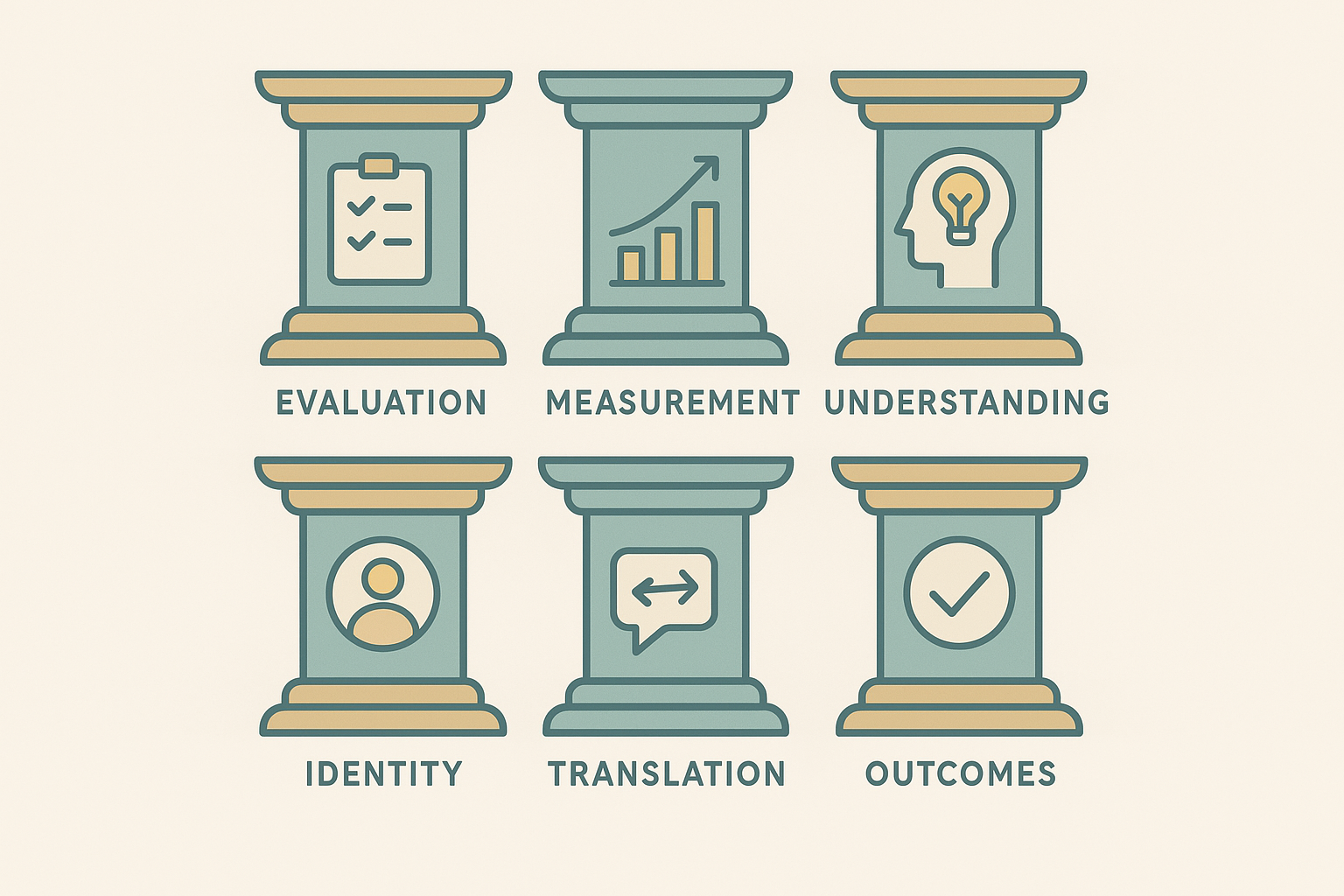
Each pillar of the framework maps directly to a week-by-week task inside the 30-day action plan.
The Six Pillars Behind Your First 30 Days
The AI4EQUITY™ Implementation Framework organizes the first 30 days around six pillars: Evaluation, Quantify, Understanding, Identity, Translation, and Yield. Each pillar is grounded in community-based participatory research, meaning the people most affected by an AI tool, patients, frontline staff, and caregivers, have a seat at the table rather than a footnote in the final report.
Specifically, Evaluation establishes facts about current AI use. Quantify scores risk and opportunity. Understanding gathers stakeholder input. Identity assigns accountability. Translation converts findings into policy language. Yield produces the final report. Together, these pillars treat trust and cultural context as conditions of performance, not optional extras layered on after the technical work is done.
Readers researching how this fits into a larger engagement may find it useful to review what is typically involved in an AI opportunity assessment for health systems, since the two processes share several diagnostic steps.
Step-by-Step: Building Your 30-Day Action Plan
Translating the framework into a working 30-day action plan follows a predictable sequence. The steps below reflect how the six pillars unfold across four calendar weeks.
- Week 1 — Run a baseline evaluation. Gather current AI tools, pilot projects, and data-governance policies already in use, then document gaps in equity oversight, consent processes, and bias testing across departments.
- Week 1–2 — Quantify risk and opportunity. Score each AI use case against cost, accuracy, and community impact criteria, prioritizing projects that affect vulnerable patient populations or carry regulatory exposure.
- Week 2 — Build understanding across teams. Host listening sessions with clinicians, data teams, patients, and community representatives to surface concerns about data ownership, consent, and algorithmic trust.
- Week 3 — Clarify identity and accountability. Assign named owners for each AI initiative, define escalation paths for ethical concerns, and document who is accountable when an algorithm underperforms for a specific group.
- Week 3–4 — Translate findings into action. Convert evaluation results into a written policy brief and a short governance checklist that leadership can approve before any new AI tool moves past pilot stage.
- Week 4 — Yield a 30-day report. Compile a summary report with prioritized next steps, budget estimates, and a recommended path toward a fuller 90-day action plan or formal AI governance framework.
Organizations seeking a sense of how to track outcomes from this process can review guidance on how to measure ROI for AI opportunity assessments in health settings.

Mapping each week on a shared board keeps the 30-day action plan visible to every stakeholder.
From Month One to the 90-Day Action Plan
Once the first month closes, most organizations are ready to expand. The 30-day cycle typically feeds directly into a fuller 90-day action plan, which is the standard services overview used to turn a diagnostic brief into an enterprise transformation roadmap. This longer engagement adds deeper governance design, staff training, and a fractional Chief AI or Health Equity Advisor role when internal capacity is limited.
Similarly, academic medical centers and universities can use the same sequence for research-stage AI tools, simply adjusting the stakeholder list to include institutional review boards and grant administrators. Organizations exploring this path often benefit from reviewing how to develop responsible AI governance frameworks for hospitals before formalizing policy language.
Common Mistakes to Avoid in Your First 30 Days
Several recurring mistakes undermine otherwise well-intentioned plans. First, organizations sometimes skip community input entirely, treating equity as a legal checkbox rather than a genuine design input. Second, many fail to name a single accountable owner, which leaves no one responsible when an algorithm underperforms for a specific patient group.
Third, some teams measure only cost savings and technical accuracy, ignoring whether staff and patients actually trust the tool enough to use it correctly. As a result, even technically sound AI systems can fail in practice. Above all, treating the first 30 days as a compliance exercise rather than a genuine listening process tends to produce reports that sit unread rather than plans that change behavior.
A note on data: information shared with this practice through an inquiry, consultation, or correspondence is used for one purpose only, to serve you well. It is never sold, rented, or disclosed to third parties for marketing or resale.
Frequently Asked Questions About the 30-Day Action Plan
What is a 30-day action plan for responsible AI?
A 30-day action plan for responsible AI is a structured, one-month sequence of steps that helps a healthcare organization evaluate current AI use, surface equity and ethics risks, and produce a written path forward before committing to larger investments.
How long does it take to build a 30-day action plan?
Most organizations can complete the full cycle in the 30 days the name implies, provided leadership designates an owner and sets aside time for stakeholder interviews early in week one.
Why not just jump straight to a 90-day roadmap?
A shorter plan forces an organization to establish facts and priorities before locking in budget or vendor decisions. Therefore, it reduces the risk of building a 90-day action plan on faulty assumptions.
What is the AI4EQUITY™ Implementation Framework?
The AI4EQUITY™ Implementation Framework is a six-pillar methodology, Evaluation, Quantify, Understanding, Identity, Translation, and Yield, that treats trust, accountability, and cultural context as performance conditions alongside accuracy and cost.
How much does a responsible AI assessment cost?
Costs vary with organization size and scope. However, most assessments are priced as a fixed engagement rather than hourly billing, which keeps planning predictable for finance teams.
What are common mistakes in the first 30 days of an AI initiative?
Common mistakes include skipping community input, assigning no single accountable owner, and measuring only cost savings while ignoring equity or trust indicators.
Who should be involved in building a 30-day action plan?
Effective plans involve clinical leadership, data and IT teams, compliance or ethics officers, and representatives of the patient communities most affected by the AI tool in question.
Does a 30-day action plan replace a full governance framework?
No. The plan is a starting diagnostic, not a replacement; it typically feeds directly into a formal governance framework once priorities and risks are documented.
How does community engagement fit into the plan?
Community-based participatory research methods are used during weeks two and three to gather input from patients and frontline staff before any policy decisions are finalized.
What happens after the first 30 days?
Organizations typically move into a fuller 90-day action plan or enterprise transformation roadmap that expands pilot projects and formalizes ongoing oversight structures.
Can academic medical centers use this plan for research AI tools?
Yes. Academic medical centers can apply the same evaluation and accountability steps to research-stage AI tools, adjusting the stakeholder list to include institutional review boards.
How do I measure success during the first 30 days?
Success is measured by having a documented inventory of AI use cases, named owners for each one, and a written brief ready for leadership review by day thirty.
What data privacy questions should the plan answer?
The plan should clarify who controls patient data, how consent is obtained, and whether any third party has access to the data generated by AI tools.
Why is trust treated as a performance metric?
Trust is treated as a performance metric because AI tools that patients or clinicians do not trust often go unused or misused, which undermines accuracy and cost goals alike.

Listening sessions during week two keep the 30-day action plan grounded in real patient and staff experience.
Bringing It All Together
In the end, a 30-day action plan is less about speed for its own sake and more about discipline. It gives health systems, biotech firms, medical-device companies, and academic institutions a realistic way to answer hard questions about data control, job impact, and algorithmic fairness before those questions become crises. Consequently, organizations that complete this first month enter any larger AI transformation roadmap with facts in hand rather than assumptions.
If your organization is ready to move from conversation to a documented plan, request a proposal to discuss how a 30-day action plan, built on the AI4EQUITY™ Implementation Framework, can fit your specific setting. You can also explore additional resources at MinisterScientist.com to see how responsible AI, health equity, and biomedical ethics guidance come together in practice.